REVIEW · AGRA
Taj Mahal with Local Agra Tour
Book on Viator →Operated by Agra Day Trip · Bookable on Viator
Agra feels like a story when you walk with the right guide. This tour pairs the Taj Mahal with stop-by-stop context, plus hands-on local moments like marble work and time to explore area bazaars. Guides like Baba and Zeeshan are known for shaping the day around what matters—where to stand, what to notice, and how the places connect.
I especially like the way the Taj visit is handled. You get help with photo viewpoints and storytelling that turns the monument from a postcard into something you can actually read. I also love the extra layer beyond monuments: you’ll be shown local marble inlay work, and the day is paced to include everyday Agra flavor (including famous street food, though it’s on you to buy).
One key consideration: monument admission fees aren’t included, and the Taj Mahal closes every Friday. That means your real total cost and your best travel day both need a quick check before you lock it in.
In This Review
- Key highlights worth planning for
- A local-style Agra day trip built around the Taj
- Taj Mahal: stories, timing, and photo angles that help you look smarter
- Agra Fort: Mughal power in marble palaces and courtyards
- Itmad-ud-Daula (Baby Taj): the detailed stop that balances the day
- Marble inlay work and street-level Agra flavor
- Price and logistics: what you pay versus what you plan for
- Comfort, timing, and the Friday closure rule
- Who this tour suits best (and who should rethink it)
- Should you book this Taj Mahal with Local Agra Tour?
- FAQ
- What is included in the tour price?
- Are monument admission tickets included?
- How long is the tour?
- Is food and drinks included?
- Do I need a passport for this tour?
- Is Taj Mahal open every day?
- Can I cancel for free?
Key highlights worth planning for
- Photo-smart Taj Mahal viewpoints from expert guidance, not guesswork
- A private group experience with only your party, plus flexible pacing
- UNESCO Agra Fort added for Mughal-era context beyond the main draw
- Itmad-ud-Daula (the Baby Taj) as a detailed, quieter counterpoint
- Local marble inlay demonstrations that connect craft to the Taj’s materials
A local-style Agra day trip built around the Taj
This is the kind of Agra tour that makes the city feel lived-in instead of rushed. You start with the main icon, then the day widens out: fortifications, a refined mausoleum often overlooked by casual schedules, and local craftsmanship you can actually see with your own eyes.
The biggest difference is the guide approach. People like Ali, Khan, Baba, and Zeeshan show up in the feedback as the kind of guides who steer you toward better angles, explain what you’re looking at, and keep the pace friendly for photos and questions. Add a driver who’s described as smooth and on time (Raju shows up in the reviews), and the logistics feel less stressful.
Also, the tour is private and timed flexibly. That matters at the Taj, where crowds and heat can change your best plan minute to minute. If your group wants a slower garden stroll or more time for pictures, this setup is built for it.
You can also read our reviews of more tours and experiences in Agra.



Taj Mahal: stories, timing, and photo angles that help you look smarter

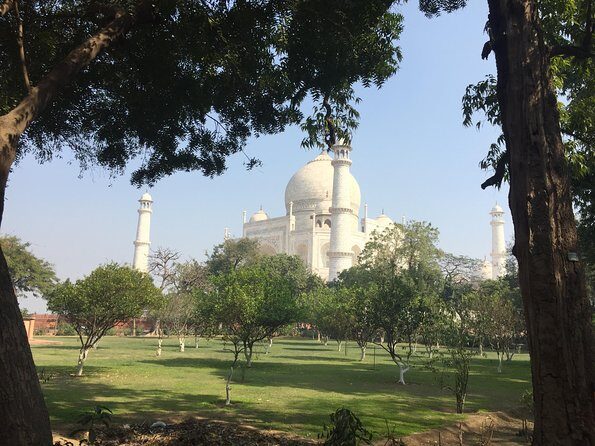
The Taj Mahal stop runs about 2 hours, and that’s a good length for doing more than just walking past the gates. With a local expert, you get the romantic origin story behind the monument’s creation, plus practical visual cues—what to watch for in symmetry, how light changes what you see in the white marble, and which parts of the complex reward taking a moment.
What I like here is that you’re not left to figure out the photo angles yourself. Guides in this program are specifically noted for taking people to the best vantage points so you can photograph the main façade and also pick up smaller details that make the Taj feel real (not just white walls and big crowds).
One more thing that helps: the Taj visit includes time for the gardens and walking routes inside the complex. Even though the Taj is the obvious star, the gardens and built layout are part of the “why it works” story. If you only skim, you miss that.
Practical note: Taj Mahal admission fees are not included. So you’ll want to budget for entry and line up any timing you can in advance. And remember the big calendar rule—it stays closed every Friday.
Agra Fort: Mughal power in marble palaces and courtyards
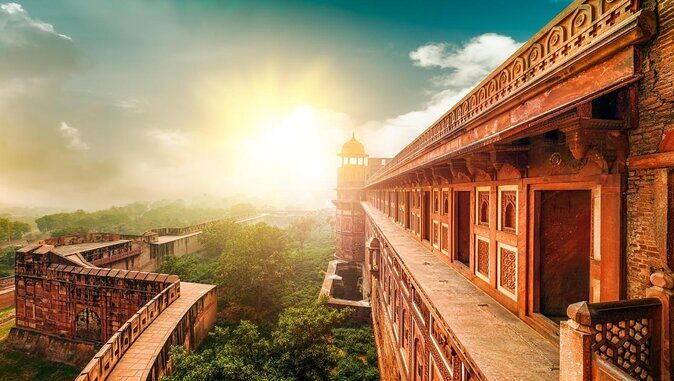
After the Taj, you shift gears to Agra Fort for about 1 hour. This is a different mood: more fortress, more military architecture, and a strong sense of Mughal power. It was a royal residence, and it shows in the grand courtyards and palace spaces carved into the fort’s structure.
This is where the guide storytelling really pays off. When you hear how the place functioned—who lived here, what the spaces were used for, and how the layout connects—you stop treating the fort like a random “next stop” and start seeing the logic behind it.
What you’ll enjoy most is the contrast. The Taj is all about the white marble and poetic love story. Agra Fort is about rulers, defense, and daily life framed by scale. Even in an hour, you can get enough context to make your photos more meaningful.
Possible drawback: entry planning. Like the Taj, monument admission fees aren’t included, so you’ll need to handle the fort ticket separately. Also, if you’re very photo-focused, an hour can feel quick, though the private format helps you adjust.
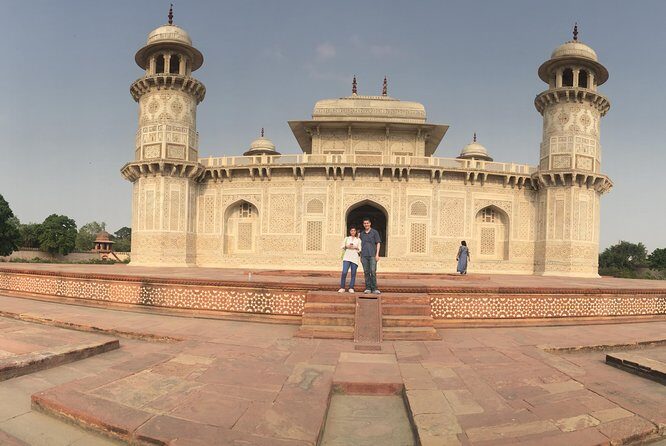
Itmad-ud-Daula (Baby Taj): the detailed stop that balances the day
Then comes Itmad-ud-Daula—often called the “Baby Taj”—for about 30 minutes. Short stop, yes, but it works because it’s a different kind of experience. Instead of the grand monument energy of the Taj, this mausoleum is all about delicate work: intricate inlay details, fine carvings, and calm garden spaces.
This stop is a smart counterweight. If your day is heavy on “big wow” moments, Itmad-ud-Daula gives you a chance to slow down and notice craftsmanship. It’s also a great “breather” if you’re dealing with midday heat, because the layout encourages walking at a calmer speed.
The guide context can change how you see it. With the right explanation, the inlay patterns and decorative choices stop feeling decorative-only and start feeling like deliberate design decisions meant to communicate status, beauty, and care.
Again, admission fees are not included. But even with that extra cost, it’s a nice value addition because it deepens the overall story of Agra’s marble culture.
Marble inlay work and street-level Agra flavor
One of the most memorable parts of this tour is the chance to see Agra craft up close, especially marble inlay work. It’s easy to understand the Taj’s beauty when you’ve seen the craft process. It turns the monument from a finished object into a result of human skill and time.
The day also builds in a local experience feel beyond the major gates—time for local bazaars and the option to taste Agra street food. Here’s the realistic angle: food and drinks aren’t included, so you’ll pay separately. But you’re not stuck with nothing to do; you’ve got a reason to explore, and your guide can help you make choices that match what you’re in the mood for.
This matters for value. A lot of budget tours are all transport and tickets, with little attention to how locals actually live. This one tries to connect the Taj’s materials and motifs to the city’s real present.
One caution: street food is not for everyone. If your group has strong dietary limits or prefers restaurants only, plan for that by budgeting and going slow with what you try. The tour gives the option, not a guaranteed meal.



Price and logistics: what you pay versus what you plan for
At $11.23 per person, the headline price looks like a bargain. That’s the kind of price that gets your attention fast—especially for an 8 to 9 hour day with a guide and private transport. The trick is to understand what’s inside that number.
Included:
- Pickup and drop-off if you choose that option
- Professional guide
- Private tour (only your group)
- Bottled water
Not included:
- Food and drinks
- Monument admission fees
So the value is strong, but your total out-of-pocket cost will rise once you add entry tickets and whatever you spend while eating. Still, the guide time and the private routing are the key “paid-for” parts here. When you’re paying for better viewpoints, clearer context, and smoother flow, you’re buying time and clarity—not just travel.
Also helpful: the tour uses a mobile ticket and offers group discounts. If you’re traveling with friends or family, the group discount can soften your entry-ticket math.
Comfort, timing, and the Friday closure rule

The tour runs about 8 to 9 hours, and it’s set up as private, so timing is described as flexible. That flexibility helps because Agra is a place where one delayed moment can ripple through your day. If the crowds are heavy at one site, you can often shift your pace a bit instead of feeling like you’re trapped in a rigid schedule.
But you should plan around the one hard stop: Taj Mahal closes every Friday. If your travel dates land on Friday, you’ll need an alternative plan or choose a different day.
Also, bring the usual Agra-day realities into your thinking: lots of walking, sun, and the fact that you’ll be moving between different kinds of spaces—gardens, courtyards, and craft areas. Bottled water is included, which is a basic but very practical win.
One more item to consider before you go: a current valid passport is required on the day of travel. That’s easy to forget when you’re packing for a day trip, so treat it like a non-negotiable.
Who this tour suits best (and who should rethink it)
This private format is great if you want the day to feel like your schedule. It works especially well for:
- Couples or small groups who want only your party with the guide
- People who care about photo composition and want help getting better angles
- Anyone who likes context—how the Taj, fort, and mausoleum connect historically and architecturally
- Travelers who want an Agra day that includes craft and street-level culture, not just monuments
If your idea of travel is purely “show me the highlights fast, no explanations,” this may feel slightly more structured than you need. Also, because admission fees and meals aren’t included, you’ll be doing a bit of budgeting and on-the-spot choosing.
Should you book this Taj Mahal with Local Agra Tour?
I’d book it if you want a Taj Mahal day that’s more than a long queue and a few photos. The combination of expert guidance, private pacing, and added stops like Agra Fort and Itmad-ud-Daula makes the day feel full without being chaotic.
It’s also a smart choice if you value craftsmanship context. Seeing marble inlay work helps you understand why the Taj looks the way it does, and it gives you something to notice beyond the obvious façade.
Just double-check two things before committing: plan for monument admission fees, and avoid Friday if you want the Taj Mahal itself. If those points line up, this is a good-value way to spend a serious day in Agra.
FAQ
What is included in the tour price?
The tour includes pickup and drop-off if you choose that option, a professional guide, a private tour (only your group), and bottled water.
Are monument admission tickets included?
No. Monument admission fees for sites like the Taj Mahal and other stops are not included.
How long is the tour?
It runs about 8 to 9 hours.
Is food and drinks included?
No. Food and drinks are not included.
Do I need a passport for this tour?
Yes. A current valid passport is required on the day of travel.
Is Taj Mahal open every day?
No. The Taj Mahal remains closed every Friday.
Can I cancel for free?
Free cancellation is available. You can cancel up to 24 hours in advance for a full refund. If you cancel less than 24 hours before the experience starts, the amount paid isn’t refunded.