Eight hours in Jaipur, your way.
This private Jaipur city tour is built for freedom, whether you ride in an open tuk-tuk for a more local feel or choose an AC car to stay comfortable in the heat. You also get pick-up and drop-off, so your day starts and ends without fuss.
I really like two things: the tight hit of top sights (City Palace, Hawa Mahal, Jantar Mantar) plus the quieter stops like Royal Gaitor Tumbas. I also like that you can add an expert guide and monument entry tickets if you want everything handled in one go.
One possible drawback: not every big-name site includes entry by default, so plan a little extra for monument tickets if you skip the add-on.
In This Review
- Key things I’d plan around
- The best part: you set the pace, not a rigid tour bus
- Price and value: what $7 per person really buys
- Albert Hall Museum: a strong start with Indo-Saracenic style and odd treasures
- Hawa Mahal: 953 windows and the best kind of “small” sightseeing
- Jantar Mantar’s giant instruments: stone tools for real astronomy
- City Palace: royal living spaces right in the heart of Jaipur
- Royal Gaitor Tumbas: an off-main-road pause with marble calm
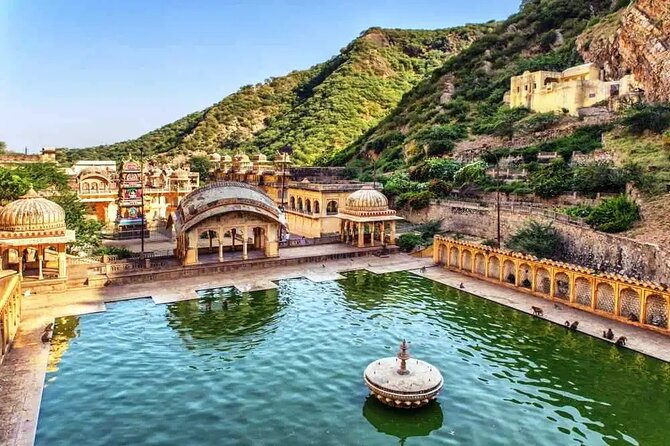
- Jal Mahal and Panna Meena ka Kund: water stories and photo-friendly contrasts
- Amer highlights: stepping through Jaleb Chowk and key gates
- The Jagat Shiromani Temple: a quieter spiritual stop to reset your head
- Choosing between tuk-tuk and car (and staying comfy all day)
- Should you book this private Jaipur city tour?
- FAQ
- How much does the private Jaipur city tour cost?
- Does the tour include hotel pickup and drop-off?
- Can I choose between a tuk-tuk and a car?
- Are monument entry tickets included?
- What sights are included in the day?
- Is this a private tour?
- What is the duration of the tour?
Key things I’d plan around
- Tuk-tuk vs AC car lets you choose comfort or street-level fun
- Hotel, airport, or railway pickup/drop-off saves you time and hassle
- Albert Hall Museum adds a strong art-and-oddities start (including an Egyptian mummy)
- UNESCO Jantar Mantar brings real science history to the Pink City
- Photo-focused stops like Jal Mahal work well even if you can’t enter
The best part: you set the pace, not a rigid tour bus
What makes this tour appealing is that it’s private. You’re not getting swept into someone else’s timing or dragged between stops when you’d rather linger. I like that the day feels built around you, not the clock—especially in a city like Jaipur where travel time can change quickly.
You’ll still see the big classics, but you get breathing room. That matters when you’re walking in strong sun, stepping into museum halls, or just taking time to watch daily life in the old city streets.
And yes, you can choose your ride. If you want to feel the city more directly, the tuk-tuk option delivers that. If you’d rather keep things comfortable, the AC car is the sane choice.
Price and value: what $7 per person really buys
The headline price looks easy on paper—$7 per person—but it helps to understand what you’re paying for. You’re not only buying sightseeing. You’re paying for a private vehicle with fuel, parking, taxes, and bottled water, plus pick-up and drop-off.
Meals are not included, so you’ll still want to budget for lunch and snacks. And many monuments list admission as not included unless you select the option that bundles monument entry tickets with an expert guide. If you want a smooth day with fewer decisions at each gate, that add-on can be worth it.
Where the value really clicks is for couples, small groups, or anyone who hates wasting time figuring out transport. Instead of juggling cabs or public transit, you get one driver/vehicle that follows your plan for about 8 hours.
Albert Hall Museum: a strong start with Indo-Saracenic style and odd treasures
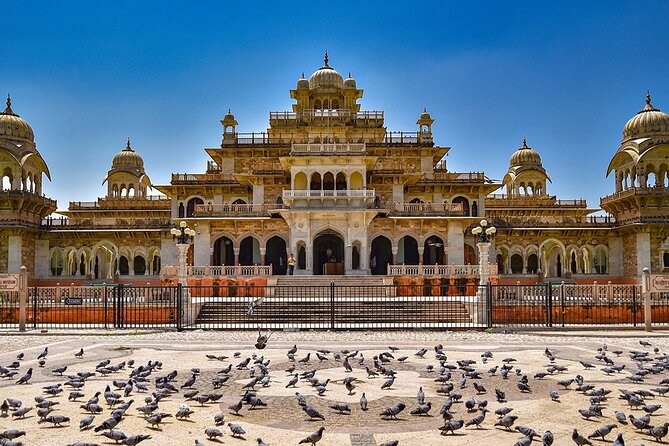
Your day begins at the Albert Hall Museum, Jaipur’s oldest museum. Even from the outside, the architecture has an Indo-Saracenic feel that signals this won’t be a boring stop.
Inside, you can expect Rajasthani collections—artifacts, weapons, and textiles—plus surprising items that widen the story beyond Rajasthan. One of the standout notes is the presence of an Egyptian mummy, which is the kind of detail that makes the museum feel like a shortcut to curiosity.
This is scheduled for about 1 hour. That’s just enough time to see a lot without turning it into homework. A practical tip: wear something comfortable, because museums are cool inside but the walkways and queues can add up outside in warmer weather.
Admission isn’t included in the basic flow, so if you want to save time, consider selecting the option that includes monument tickets.
Hawa Mahal: 953 windows and the best kind of “small” sightseeing
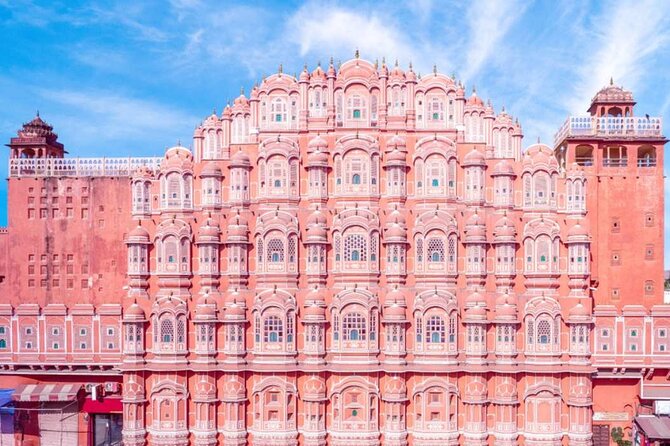
Next comes Hawa Mahal, often called the Palace of Breeze. It’s a five-story pink sandstone building designed for royal women to watch street life and festivals from behind those tiny openings.
The famous detail here is the 953 small windows. Up close, it’s easier to appreciate how clever the design is—more ventilation than fortress vibes, with a facade that stays visually dramatic even when you’re just passing by.
You’ll spend about 45 minutes. That’s the right length for photos and a quick understanding of why the building looks the way it does. Admission is not included by default, so again, the ticket add-on can reduce friction.
If you’re choosing between tuk-tuk and car, this is a good point to decide how you’ll handle the heat. Tuk-tuks can feel great at street level, but you’ll feel more sun.
Jantar Mantar’s giant instruments: stone tools for real astronomy
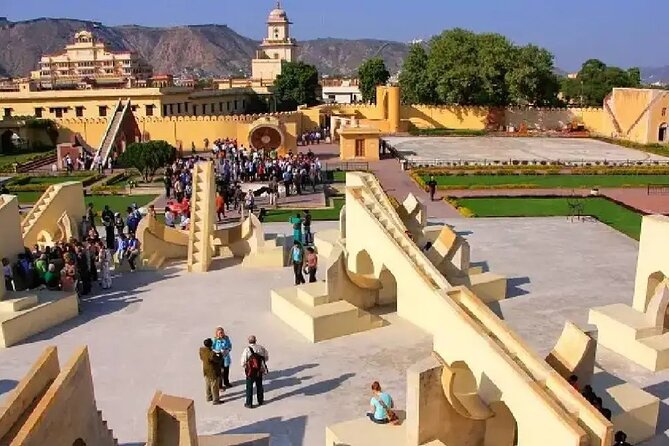
Then you’ll hit Jantar Mantar, a UNESCO World Heritage Site built around astronomy. The instrument scale is what gets you first: giant stone devices made for observing celestial patterns.
You’ll also get the story behind it—how Maharaja Jai Singh II tracked celestial bodies with serious accuracy in the 18th century. This isn’t just ancient decoration. The place is basically a hands-on lesson in how people measured the sky before computers and apps.
Plan about 45 minutes here. It’s enough time to see the main instruments and understand the idea without racing. Admission isn’t included by default, so decide based on your preferred pace: pay as you go, or bundle tickets with your guide.
A practical note: don’t expect a guided lecture in every corner. Even without a guide, you can still get a lot from simply looking at the instruments and imagining how they worked. With a guide, the explanations tend to make the shapes click faster.
City Palace: royal living spaces right in the heart of Jaipur
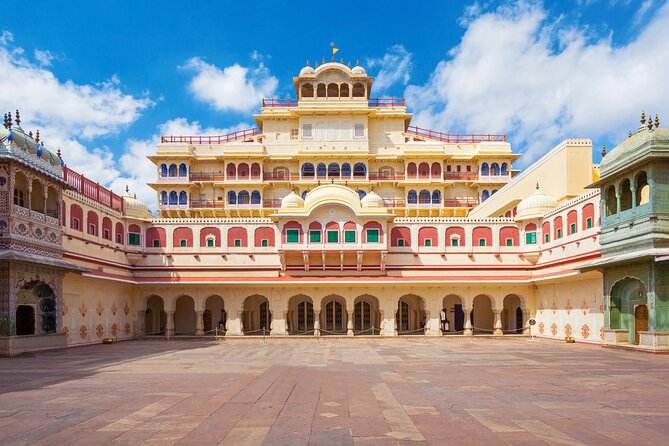
After that, you’ll spend around 2 hours at the City Palace, one of the key royal landmarks in Jaipur. This is the kind of place where you can walk through courtyards and feel how the palace functions as more than a museum shell.
It was built by Maharaja Sawai Jai Singh II, and importantly, parts of it are still used by the royal family. That detail changes the vibe. You’re not just looking at a set piece. You’re seeing an active heritage site.
Admission is listed as not included by default. So if you want this stop to be easy and uninterrupted, consider choosing the option that includes monument entry tickets.
If you like architecture, details, and layered space, this is your best “slow down” moment. Give it time to breathe, because palace spaces can be visually dense—doors, courtyards, and angles everywhere.
Royal Gaitor Tumbas: an off-main-road pause with marble calm
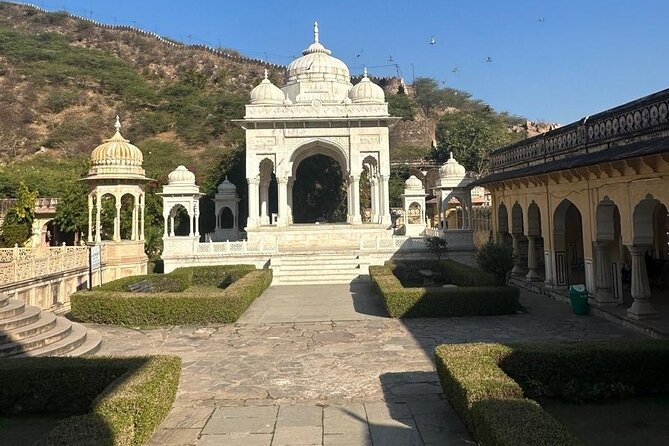
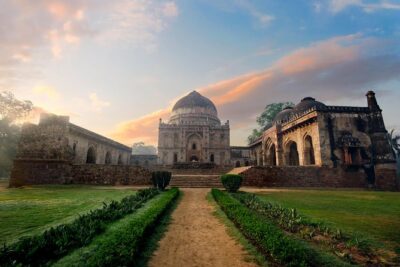
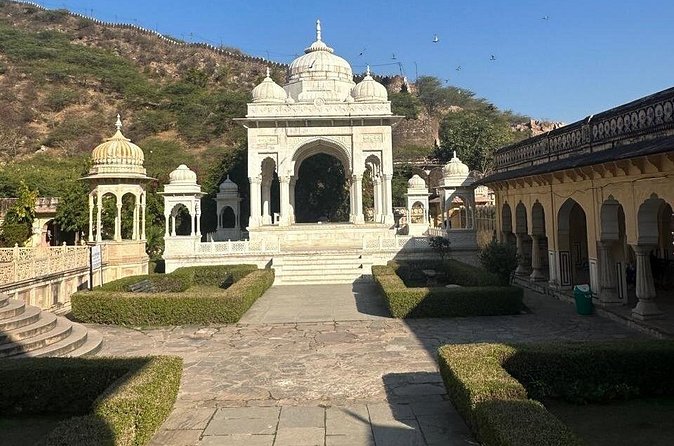
Next is Royal Gaitor Tumbas (also known as Gaitore Ki Chhatriyan). This is a calmer, less crowded change of pace. It’s a marble cenotaph complex where Jaipur’s rulers were cremated, with ornate carvings and a quieter atmosphere than the loudest central monuments.
You’ll spend about 30 minutes. That’s enough to take it in, notice the craftsmanship, and reset your head before you move into the photo-and-stairwell section of the day.
Admission isn’t included by default, but it’s a stop that feels worth checking on even if you’re not chasing every ticketed site. The main value is the tone—this is where the day slows down.
Jal Mahal and Panna Meena ka Kund: water stories and photo-friendly contrasts
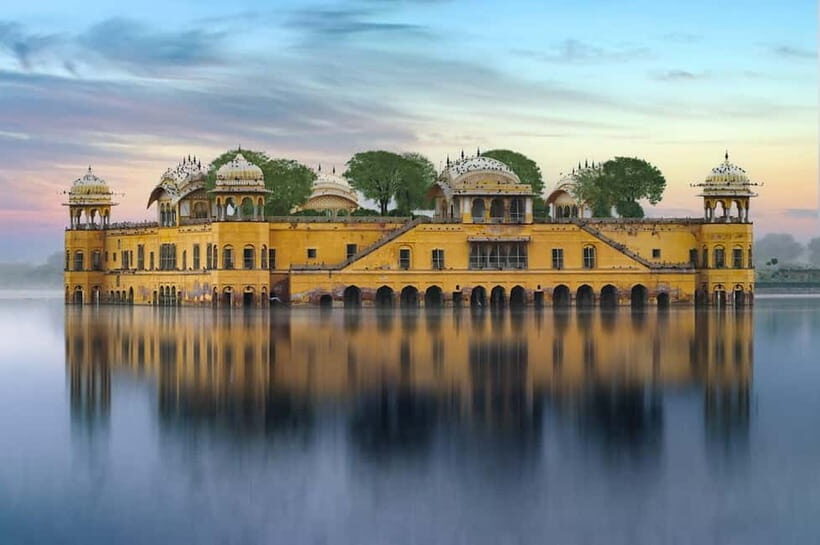
Jal Mahal is the quick one—about 15 minutes. It’s the famous palace sitting in the middle of Man Sagar Lake. The key thing: entry isn’t allowed, so you’re there for views and photos, not wandering inside.
The background helps too. When the light works, the Aravalli hills make a strong framing effect. Even if you’ve seen Jal Mahal in pictures, seeing it in person often feels more surreal than expected—because it’s so clearly built for a specific visual relationship with the lake.
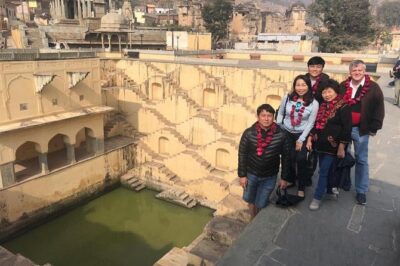
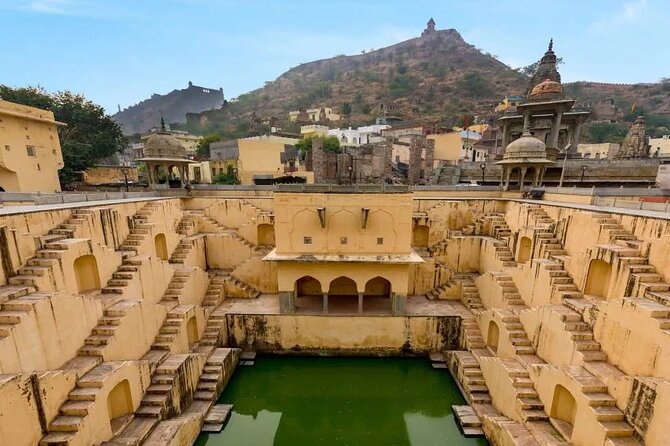
Then you’ll go to Panna Meena ka Kund, an ancient stepwell used for water collection and community use. This is free to enter and gives you about 30 minutes.
What makes the stepwell special is the symmetry—staircases that feel designed with geometry in mind. If you like architecture and lines, this stop can be more satisfying than the bigger name sights because it’s so visually structured.
One practical tip: stepwells can be cool and shaded, but the approach areas may be bright. Bring sunglasses and keep an eye on your footing.
Amer highlights: stepping through Jaleb Chowk and key gates
Amer is where the day turns into a proper old-city walk. You’ll spend about 2 hours here and focus on Jaleb Chowk, the main courtyard where soldiers once assembled and marched.
You’ll also go through major gates, including Suraj Pol and Chand Pol. Each has historical significance, and the names are easy to remember once you see the way the entrances shape movement through the space.
Admission is listed as free for this part of the schedule, which helps keep costs predictable. You’ll still want comfortable shoes, because “free” doesn’t mean “easy.”
If you’re doing this in the heat, Amer is often worth it early or mid-day when you’re still fully energized. If you’re dragging, take short breaks and don’t force the longest route just for one extra photo.
This is also a great stop for a private guide moment—if you choose the guide option—because gates and courtyards are easier to understand when someone explains how they were used.
The Jagat Shiromani Temple: a quieter spiritual stop to reset your head
Along the way, the tour includes a stop at the Jagat Shiromani Temple. The point here isn’t “big monument score.” It’s a calmer, more spiritual pause that breaks up the day of palaces and architecture.
This works well if you’ve had enough museum time and want something that feels like a local place people visit. Even if you keep it brief, the change of pace can make the rest of the sightseeing feel less like a checklist.
If you’re choosing between tuk-tuk and car, this stop also helps you decide your pacing. In a car, you’ll likely conserve energy; in a tuk-tuk, you’ll feel more of the surrounding street life.
Choosing between tuk-tuk and car (and staying comfy all day)
If I were picking for a friend:
- Choose the AC car if you’re sensitive to heat, want easier breaks, or have limited time for long walks.
- Choose the tuk-tuk if you want the most street-level feel and don’t mind more exposure to sun and roadside noise.
Either way, you’ll benefit from the private structure. You’re not stuck waiting for transfers. If a stop runs longer than expected—City Palace can do that—you don’t have to panic about missing the rest.
Also, bring small essentials: sunscreen, a hat, water (you’ll have bottled water on the tour, but it’s still smart), and a light layer if you plan to move between sunny outdoors and cooler museum interiors.
For comfort on photos: flip-flops are not the move. You’ll walk more than you think across courtyards and between photo points.
Should you book this private Jaipur city tour?
I’d book this tour if you want a private day that hits Jaipur’s key sights without turning the city into a hard slog. It’s especially smart if you’re traveling as a couple or small group and value pick-up and drop-off.
It’s also a good fit if you like the mix of spectacle and quiet. You get major names like Hawa Mahal and Jantar Mantar, and then you get the calmer reset of places like Royal Gaitor Tumbas and the stepwell at Panna Meena ka Kund.
Before you book, decide how you want to handle admission tickets. If you don’t want to think about it mid-day, choose the option that includes monument entry tickets and an expert guide.
One extra practical note: the service often comes through with reliable drivers such as Firoz Khan or Vinod (spelled Vinot in at least one write-up). If you get someone like them, you’ll likely have a smooth, careful day and solid local guidance, including where to eat Rajasthani food.
If you want a fixed bus-tour vibe with guaranteed “no thinking required,” this may still be flexible enough—just remember meals aren’t included and some major monuments may cost extra depending on what option you pick.
FAQ
How much does the private Jaipur city tour cost?
The price is listed at $7.00 per person.
Does the tour include hotel pickup and drop-off?
Yes. The tour includes hotel/airport/railway station pick-up and drop-off.
Can I choose between a tuk-tuk and a car?
Yes. A private vehicle is provided, and you can choose a tuk-tuk or a car.
Are monument entry tickets included?
Not automatically. Monument entry tickets are not included unless you choose the option that includes an expert guide and monument entry tickets.
What sights are included in the day?
You’ll visit Albert Hall Museum, Hawa Mahal, Jantar Mantar, City Palace, Royal Gaitor Tumbas, Jal Mahal (photo stop), Panna Meena ka Kund, and Amer. The tour also includes a stop at Jagat Shiromani Temple.
Is this a private tour?
Yes. It’s private, meaning only your group participates.
What is the duration of the tour?
The tour is listed at about 8 hours.