REVIEW · CITY TOURS
Private Full Day Guided Tour of Jaipur, India’s Pink City
Book on Viator →Operated by Private Driver In India · Bookable on Viator
Jaipur feels manageable when it’s private. You get hotel pickup/drop-off and a professional guide in an air-conditioned vehicle, so you can focus on the sights instead of the logistics. I also like that bottled water is included, which helps on a hot day. The one thing to double-check is the description: it also mentions Taj Mahal and Agra Fort entry, while the actual route is Jaipur-focused—so confirm what’s truly on your day before you go.
This style of day works because it’s structured but not rushed. You’ll cover a big mix of Jaipur landmarks, from forts and royal complexes to a science-and-royalty mashup at Jantar Mantar. One possible drawback: several stops list entrances as not included, so expect extra ticket costs on top of the base price.
In This Review
- Key highlights at a glance
- Private Jaipur in an AC car: why this format works
- Price and value: what $20 per person really means
- Amer Fort area: where Jaipur starts feeling monumental
- What I’d focus on during your Amer time
- Jal Mahal and Man Sagar Lake: a quick scenic reset
- Royal Gaitor Tumbas: quieter royalty below Nahargarh
- Jantar Mantar and City Palace: science meets monarchy
- Jantar Mantar: 19 astronomical instruments
- City Palace: Mughal and Rajput design in one compound
- Hawa Mahal and Albert Hall Museum: architecture plus a calmer museum stop
- Hawa Mahal: the Palace of Breeze
- Albert Hall Museum: when the day needs a breather
- Transport, timing, and how not to burn the day
- About the guides and drivers: what the operator’s reputation suggests
- Should you book this private Jaipur day?
- FAQ
- How long is the Jaipur private guided tour?
- Do I get hotel pickup and drop-off?
- Is transportation air-conditioned?
- Are monument entrance fees included?
- Is lunch included?
- Is bottled water provided?
- What about cancellation if weather is bad?
Key highlights at a glance

- Private, on-demand pacing: only your group rides together with a guide
- AC transport with pickup/drop-off: a big comfort win in Jaipur traffic
- Water provided: small detail, big help when you’re walking in the heat
- Major Jaipur icons in one day: Amer area, City Palace, Hawa Mahal, and more
- A mix of quick stops and longer visits: 15-minute scenic breaks plus 2-hour blocks
- Some entrances may be extra: the schedule flags multiple sites as not included
Private Jaipur in an AC car: why this format works
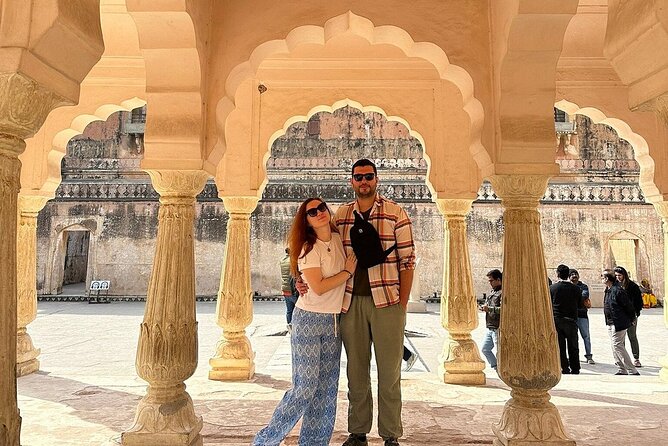
Jaipur is famous, which also means it can get crowded at the wrong moments. This private setup solves the biggest annoyance: you don’t need to figure out routes, timings, or how to herd a group through ticket lines.
With pickup and drop-off, you start from wherever you’re staying, and you stay seated between stops. That matters because a full-day itinerary often becomes a “transport time tax” in big cities. Here, the itinerary is built around several distinct areas, so you’re not wasting the day shuffling across town.
I also like that you get a professional guide. Even at the most photo-friendly sites, a guide adds the missing context: what you’re seeing, why it was built, and what to notice while you’re standing there. You’ll get explanations tied to Rajasthan’s rulers and the design choices behind the monuments.
One more small detail that helps: the tour can be operated by a multi-lingual guide. That’s a practical comfort if your group includes people who prefer different languages.
Price and value: what $20 per person really means

At $20 per person, this looks like a budget-friendly way to do Jaipur with private transport and a guide. The catch is the usual one for many landmark-heavy days in India: monument entrance fees are not included.
So your real cost has two layers:
- Included: guide, private AC vehicle, fuel/parking/taxes, and bottled water
- Usually extra: ticketed entrances and lunch
The schedule shows some stops with admission listed as not included. It also shows Amer with admission ticket marked free in the stop details. Because the offer also says monuments entrance fees aren’t included, I’d treat this as a “some sites may require tickets” situation. In other words, don’t count on every entrance being free.
The value sweet spot is groups. The tour lists group discounts, and with private driving you’ll typically pay less per person when there are more people to share the car.
Finally, there’s one more detail you should validate before you commit: the description claims entry to the Taj Mahal and Agra Fort is included. Your planned stops are all Jaipur sights (Amer, Jal Mahal, Royal Gaitor, Jantar Mantar, City Palace, Hawa Mahal, Albert Hall Museum). Since the day’s geography can’t easily fit Taj Mahal and Agra Fort alongside this Jaipur list, I’d confirm which version you’re booked on. Better a quick message now than a surprised start time later.
Amer Fort area: where Jaipur starts feeling monumental
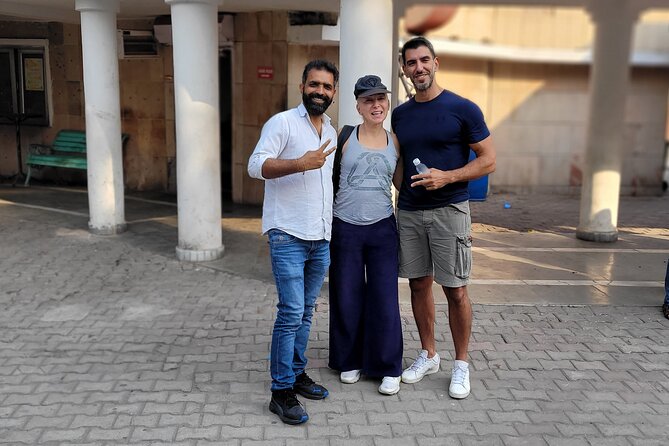
Amer is often where people understand why Jaipur was built to impress. It’s on the outskirts, and the fort area gives you that classic Rajput stronghold feel—thick walls, commanding views, and palace-like spaces that were designed for power.
In this itinerary, you get about 2 hours at the Amer stop. That’s enough time to do more than a quick walk-and-snap. You can actually slow down, take in the scale, and let the guide point out what’s significant.
A practical note: fort complexes usually mean stairs, uneven ground, and shaded spaces that can still get hot. If your group includes older folks or anyone with mobility limits, bring comfortable shoes and plan for a few pauses.
Also, the schedule labels Amer admission as free for that stop, but the overall offer says monument entrance fees aren’t included. So I’d assume you might still pay something connected to access areas. Keep a little cash or card handy, just in case.
What I’d focus on during your Amer time
Look for how the fort’s layout creates views toward the surrounding area. Your guide can help you match features to the story of Amer and the rulers who shaped it—this is where the “why this looks like this” becomes real.
Jal Mahal and Man Sagar Lake: a quick scenic reset
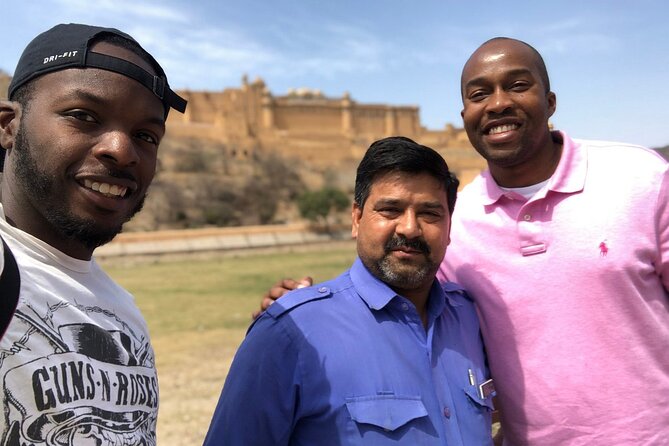
Jal Mahal, the palace on/near the lake, is one of those Jaipur sights that works even when you don’t stay long. This stop is listed at 15 minutes, and that’s exactly what it needs to be.
The value here is visual. You get a short break to take photos, absorb the unusual idea of a palace associated with water, and reset before the more “walk-heavy” stops.
Because it’s a short visit, the main drawback is obvious: you won’t feel like you truly explored. Think of it as a scenic stop, not a full attraction.
Still, 15 minutes can be a good trade-off on a full-day itinerary. It keeps your energy for City Palace and the rest, where you’ll spend more time.
Royal Gaitor Tumbas: quieter royalty below Nahargarh
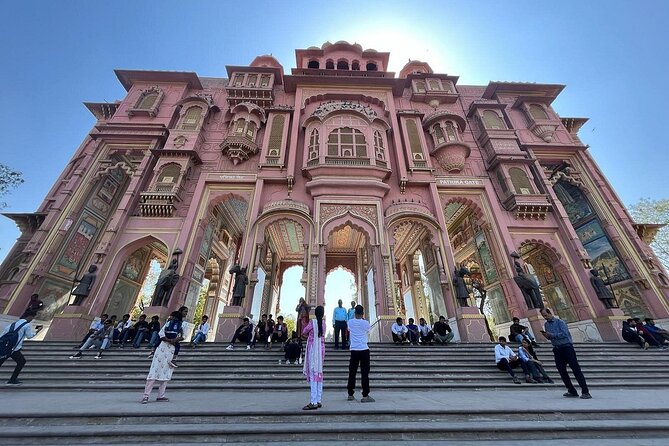
Royal Gaitor is a very different mood from the big marquee sites. It’s a collection of mausoleums for Jaipur’s former rulers, located below Nahargarh Fort. In the itinerary it’s given around 30 minutes.
This stop is short, but it’s the kind of quick detour that makes a private day feel more personal. You’re not just ticking off famous places—you’re getting a glimpse of how royal power was remembered and physically represented.
The downside is ticket expectations. The schedule notes admission is not included for this stop. So again, expect some extra cost depending on what you choose to enter and how access is handled on the day.
If you like less-crowded spaces, this is one place where your group pacing can pay off. A guide can also help you understand the symbolism of the tombs rather than treating it as a simple photo stop.
Jantar Mantar and City Palace: science meets monarchy
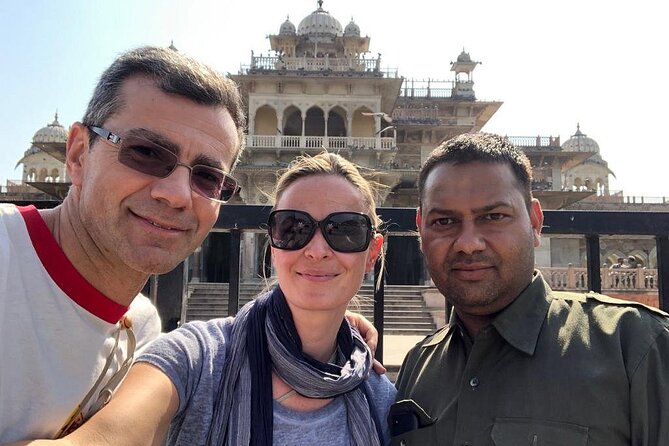
Two of Jaipur’s most interesting stops come back-to-back: Jantar Mantar and the City Palace complex. Together they show how Jaipur fused big ideas with royal ambition.
Jantar Mantar: 19 astronomical instruments
Jantar Mantar is built around astronomical instruments created by Sawai Jai Singh, and the complex is linked to the founding of Jaipur. In the itinerary, you get about 1 hour here.
What makes this worth your time is that it’s not just stone shapes. It’s a field of tools, designed to measure and observe. If you have a guide, they can point out what each instrument does, which turns the place from confusing rocks into a logical system.
Your drawback: it’s ticketed, and the schedule says admission is not included. So plan for that extra line-item cost.
City Palace: Mughal and Rajput design in one compound
City Palace gets about 2 hours, which is a generous block in a day this packed. You’ll be inside the walled city area, and you’ll see a design blend associated with both Mughal and Rajput influences.
A big plus of having a guide is perspective. City Palace can look like “pretty buildings” if you only glance. With time and explanations, you’ll start noticing how spaces were organized and how the royal seat functioned.
The drawback is simple: admission is not included in the schedule. Also, with 2 hours, you’ll want to pace yourselves—choose what to see rather than trying to cover every corner.
Hawa Mahal and Albert Hall Museum: architecture plus a calmer museum stop
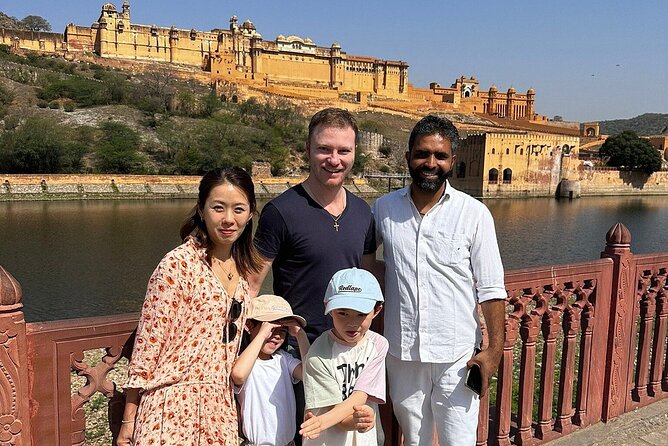
Hawa Mahal: the Palace of Breeze
Hawa Mahal, built in 1799 as an addition to the Royal City Palace, is one of Jaipur’s most recognizable facades. This stop is listed at about 1 hour.
If you’ve seen photos, you already know the look. What you may not expect is how useful an hour is if you pair it with good guidance—your guide can help explain why the building’s style matters and what the design was meant to do.
The drawback is that it’s ticketed (admission not included). It’s also a visual stop, so if your group prefers interior-heavy attractions, you might want to spend extra time asking questions rather than sprinting for photos.
Albert Hall Museum: when the day needs a breather
After a day of forts and palaces, Albert Hall Museum gives you a calmer indoor rhythm. You get around 1 hour at the museum.
It was founded in 1887 and named after Prince of Wales, Albert Edward, who visited Jaipur in 1876. The museum’s collection is described as including artifacts, paintings, and sculptures.
This is also where you’ll appreciate the pacing of the itinerary. You don’t just stack outdoor monuments all day. You get a change of pace that still counts as culture.
As with other stops, admission is not included. And museums can mean lines or slower movement depending on how crowded it is. An hour is a solid amount if you go with a plan—focus on the themes you care about and let your guide direct you.
Transport, timing, and how not to burn the day
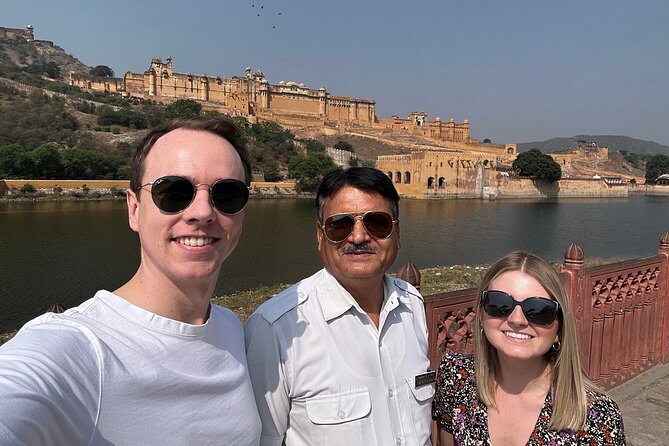
The tour runs about 9 to 10 hours. That’s a full day, but the itinerary is built to distribute walking and sit-down time.
Here’s what your time map likely feels like:
- Longer blocks: Amer (2 hours) and City Palace (2 hours)
- Mid blocks: Jantar Mantar (1 hour) and Albert Hall Museum (1 hour), plus Hawa Mahal (1 hour)
- Quick stops: Jal Mahal (15 minutes) and Royal Gaitor (30 minutes)
The best way to make this feel good is to treat the short stops as breaks, not “second-class attractions.” If you chase every photo angle like it’s a half-hour shoot, you’ll feel rushed everywhere else.
Also, remember that the tour includes bottled water, but it does not include lunch. Bring or buy small snacks if you know you get hungry between stops. Even a quick bite can save your energy for the next walk.
Finally, confirm the departure and return time. Most “9–10 hours” days come with tight buffers, and you’ll enjoy the day more if you know when you’ll be back at your hotel.
About the guides and drivers: what the operator’s reputation suggests
I can’t ignore the pattern in the broader feedback: people praise the operator’s communication and the calm competence of the drivers and guides. Names like Kumar, Manoj, and Amit appear in past experiences, with comments that they were polite, punctual, and helpful—especially with guiding through logistics and keeping the day smooth.
For you, the practical translation is this: private sightseeing works best when someone is proactive. In India, that means handling timing, helping with the flow of tickets, and keeping you from wasting energy on confusion.
Even so, you should still do your part: carry the right documents, be ready on time at pickup, and ask the guide what order they recommend if your group has specific priorities.
Should you book this private Jaipur day?
Book it if you want:
- a private Jaipur day with pickup/drop-off and AC comfort
- a structured route that hits major sites like Amer, City Palace, and Hawa Mahal
- a guide to explain what you’re seeing, not just drop you at gates
Skip or re-check it if:
- you care most about deep museum time or long interior exploration at every stop
- you expect every monument entrance to be included (the info suggests fees are often extra)
- you want a guaranteed mix that includes Taj Mahal and Agra Fort in the same day as the Jaipur stops—because the description and the listed Jaipur route don’t perfectly match, so you need confirmation
If you’re doing Jaipur for the first time and you want a well-paced day without the stress of navigating by yourself, this private format is a solid value—especially if you travel as a small group and can take advantage of the group discounts.
FAQ
How long is the Jaipur private guided tour?
It’s listed as approximately 9 to 10 hours.
Do I get hotel pickup and drop-off?
Yes. Hotel pickup and drop-off are included.
Is transportation air-conditioned?
Yes. You travel by a private AC vehicle.
Are monument entrance fees included?
No. The offer lists monuments entrance fee as not included.
Is lunch included?
No. Lunch is not included.
Is bottled water provided?
Yes. Bottled water is provided.
What about cancellation if weather is bad?
The experience requires good weather. If it’s canceled due to poor weather, you’re offered a different date or a full refund.