REVIEW · CITY TOURS
Old & New Delhi City Tour – Half or Full Day Options Available
Book on Viator →Bookable on Viator
Delhi packs a lot into one day.
This private tour strings together Old Delhi streets and New Delhi landmarks in one smooth loop, using a car plus a rickshaw where it counts. You pick your start time between 9 AM and 11 AM, then you’re guided from site to site with bottled water in hand while your guide explains what you’re actually looking at.
I especially like two things: the rickshaw ride through Old Delhi and the fact you’re with a private guide who can tailor the pace to your group. In the feedback I saw, guides such as Gurvinder and drivers like Brajkishor (and Jeetu) earned praise for clear explanations, smart navigation, and making solo visitors feel comfortable.
The main thing to watch is cost creep. Monument entry tickets are not included, and on Mondays Red Fort and Lotus Temple are closed, so the plan swaps in Gurudwara Bangla Sahib instead.
In This Review
- Key highlights to know before you go
- How the private car route actually feels in Delhi
- Price and value: $30 a person, then plan for entrances
- Gurudwara Bangla Sahib: a meaningful start with a story
- Jama Masjid and Chandni Chowk: mosque scale, then street-level momentum
- Khari Baoli: spices you can actually use
- Red Fort and the Mughal power center feeling
- India Gate, Parliament, and Rashtrapati Bhavan: New Delhi in public view
- Agrasen Ki Baoli and Humayun’s Tomb: legends, then UNESCO gardens
- Lotus Temple to finish: a modern design reset
- Timing that keeps you in control during a 4–8 hour day
- Should you book this Old & New Delhi private day tour?
- FAQ
- How long is the Old and New Delhi city tour?
- Is this tour private?
- Does the price include monument entry tickets?
- What’s included in the tour besides pickup and drop-off?
- Do you offer airport pickup and drop-off?
- What happens on Mondays if Red Fort or Lotus Temple are closed?
- What is the cancellation window?
Key highlights to know before you go
- Private for your party with an air-conditioned vehicle and only your group involved
- Old Delhi by rickshaw, plus guided time at major sights
- Bottled water included, so you can keep moving without hunting for drinks
- Some entrances cost extra, especially for Red Fort, Jama Masjid, and Humayun’s Tomb
- Guides adjust when needed, including working around sites you may have already visited
How the private car route actually feels in Delhi
This is a private tour, which means you’re not stuck waiting for other groups or herded into random time slots. For the day, you get your own air-conditioned vehicle, a driver, and a tour guide who keeps the story going while you travel between New Delhi and Old Delhi.
Pickup is flexible. You can be collected from essentially anywhere in Delhi proper, plus common suburbs and airport areas such as Aerocity, Noida, Gurugram, Ghaziabad, and Faridabad. The start window is 9 AM to 11 AM, and you’ll also get a drop-off at the end back to your chosen destination in the same Delhi region.
Group size affects the vehicle. For 1–2 people, it’s a 3-seater sedan (Toyota Etios or similar). For 3–5, you’ll ride in a 6-seater wagon (Toyota Innova or similar). Larger groups move up to a 10-seater van (Tempo Traveler) or a 16-seater minivan. Practically, that means you’re less likely to feel cramped during transfers, and the tour stays comfortable even when the itinerary stretches toward a full day (about 8 hours).
The “best of both worlds” part comes from how the route is built: you’re not just driving past monuments. You’ll spend real time in Old Delhi on foot and by rickshaw, and you’ll hit the big New Delhi memorial and government landmarks too.
Price and value: $30 a person, then plan for entrances
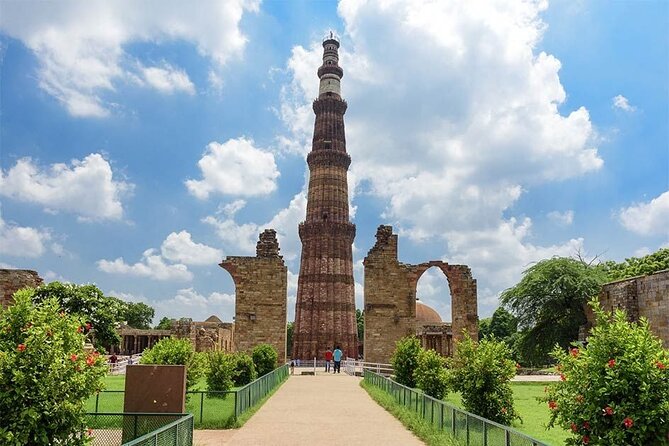
At $30 per person, the headline price is easy to like. What makes it feel like value is what’s included around it: pickup and drop-off, private transportation, the driver and parking fees, your rickshaw ride in Old Delhi, and bottled water during the tour. You also have a guide at the sites throughout the day.
Then there’s what’s not included. Entry tickets to monuments are separate, and meals are not part of the price. In plain terms: if you’re expecting everything to be fully packaged, this isn’t that kind of deal. You’ll want to budget for paid entry at places like Jama Masjid, Red Fort, and Humayun’s Tomb.
Still, the structure is smart. Several stops are listed as free admission (for example, Gurudwara Bangla Sahib, Chandni Chowk, Khari Baoli, India Gate, and Lotus Temple). That means you can concentrate your paid-entry spending where it matters most, rather than paying at every single stop.
If you’re visiting with a small group, private transport + a guide can be a bargain compared with piecing it together yourself day-of. And if you’re traveling solo, the private format is a big confidence boost—one of the reasons solo visitors highlighted feeling safe and comfortable.
Gurudwara Bangla Sahib: a meaningful start with a story
Your day begins on the New Delhi side, then you head to Gurudwara Bangla Sahib. This stop is free, and it’s more than a quick photo stop. The key connection is to the eighth Sikh Guru, who stayed here in 1664 and is associated with healing many during a cholera epidemic. You’ll also see the Sarovar, the holy pond at the site.
Why I like this as a start: it’s a reset before Old Delhi. Even if your schedule is tight, the tone here gives you context. You’re not only ticking off famous buildings; you’re learning how Delhi’s different communities and traditions have shaped the city.
Time is short and workable—plan on about 30 minutes. That’s enough to take in the setting and hear the explanation without turning the morning into a long sit-down event.
Jama Masjid and Chandni Chowk: mosque scale, then street-level momentum
Next up is Jama Masjid, the largest mosque in India. It’s a major stop, and it isn’t free. You’ll have to handle admission tickets separately here, and the visit is longer than the early moments—about 1.5 hours.
The detail that makes Jama Masjid special is not vague “history talk.” You’re told it was built in 1656 by 5,000 workers, using red sandstone. If you walk into that courtyard area, you’ll quickly understand why scale matters; it was designed to hold crowds.
From there, you switch into Chandni Chowk. This is also where you get the guided street experience. You’ll ride by rickshaw through the area, weaving past the bazaars. Your guide shares why these markets matter in daily life, which helps you see the place as more than a set for photos.
Chandni Chowk is listed as free admission, and you’ll spend about 1 hour here. Practical note: this is where the tour starts feeling like “Delhi on the move.” The rickshaw ride is short, but it helps you cover ground while staying oriented.
Khari Baoli: spices you can actually use
After the Chandni Chowk area, you head to Khari Baoli, a famous spice market. This stop is free and lasts about 30 minutes.
If you’ve never been to a wholesale-style spice market, this part is useful. You’re not just smelling the aromas; you’re also learning facts about different spices and their uses. That’s a nice balance to the monument-heavy day. It gives you something you can take home—at least as knowledge—without turning the day into an all-day shopping mission.
The time here is short by design. It keeps the schedule moving toward the major Mughal and memorial landmarks, so you don’t end up hungry and stuck with no time left.
Red Fort and the Mughal power center feeling
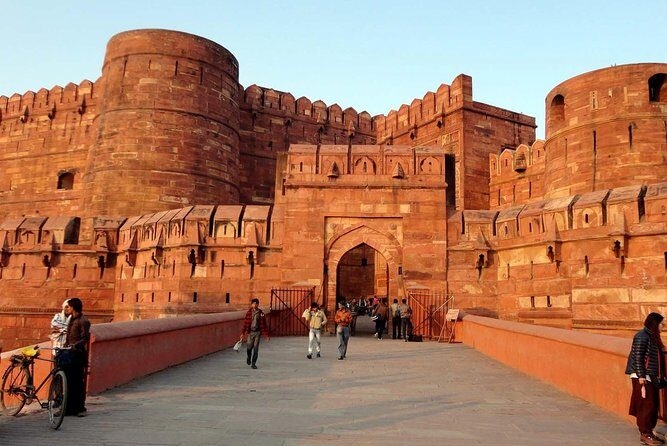
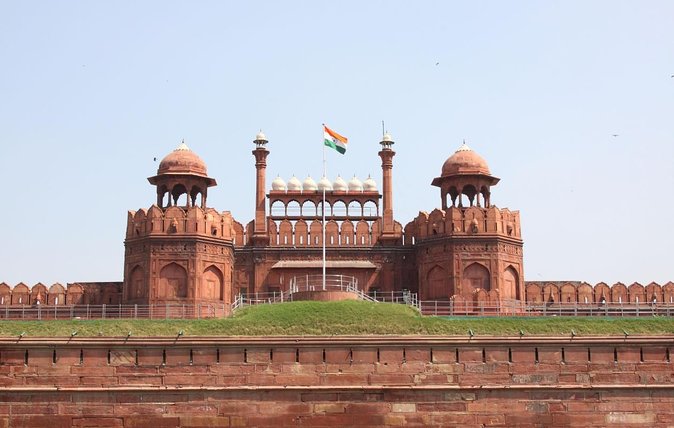
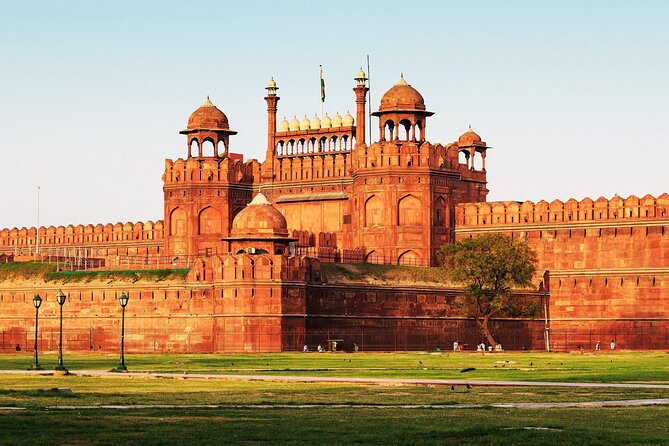
Then you move to Red Fort, one of Delhi’s most recognizable monuments. It’s built by Shah Jahan between 1639 and 1648, and the architecture mixes Indo-Islamic and Mughal styles. The fort also served as the main residence of the Mughal emperors.
This stop is one of the paid-entry ones. The time in the schedule is built so you can see it as part of the larger day, not as a standalone museum project.
Why I think Red Fort belongs in this day plan: it anchors the Mughal story you’ve been hearing since earlier Old Delhi stops. The city’s layers make more sense when you see how power, residence, and monumental design connect in one place.
If you’re doing the tour on a Monday, though, take note: Red Fort is closed on Mondays. The tour swaps in Gurudwara Bangla Sahib instead on those days, so you still get a strong cultural start even when one big landmark is off the list.
India Gate, Parliament, and Rashtrapati Bhavan: New Delhi in public view
After the Old Delhi stretch, the day moves back into New Delhi’s formal landmarks.
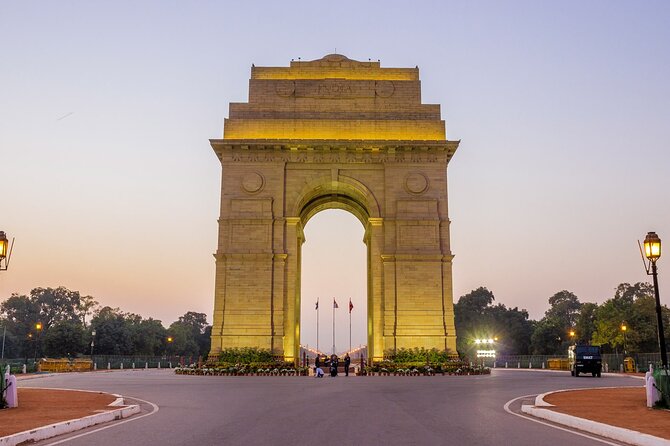
India Gate is next, and the stop is only about 30 minutes. It’s free admission. The memorial is the 1921 Tomb of the Unknown Soldier, honoring 13,300 Indian soldiers who died in World War I, with their names engraved on the memorial’s walls.
This is a good time-box. You can feel the solemn tone without losing half your day. Plus, the contrast from Old Delhi is big—in a helpful way—so your brain gets a breather.
Then you explore two iconic government buildings. First is Parliament House, the seat of India’s bicameral legislature, where the Lok Sabha (lower house) and Rajya Sabha (upper house) convene. After that comes the President’s House, which was originally the Viceroy’s residence and is now Rashtrapati Bhavan, the official home of the President of India.
The schedule doesn’t frame these as long indoor visits, so treat them as “see it and learn it” stops. If you want deep museum time, you’d need a separate plan. For a one-day overview tour, this is efficient and keeps your energy for the tomb and temple later.
Agrasen Ki Baoli and Humayun’s Tomb: legends, then UNESCO gardens
Next you go to Agrasen Ki Baoli, a historic stepwell that comes with eerie legends. The description leans into stories of hauntings and strange happenings, and it’s often regarded as a paranormal hotspot.
This is a fun pause. Stepwells tend to be overlooked when people rush between big monuments, but this one has a built-in narrative hook. At about 30 minutes, it’s long enough to learn the legend and see the structure without turning it into a detour.
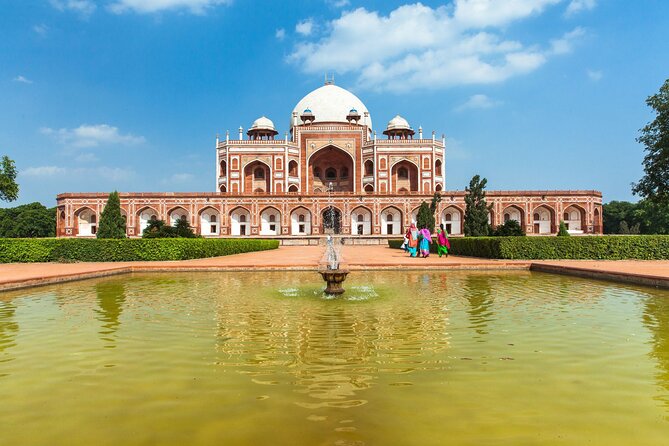
Then comes Humayun’s Tomb, a UNESCO World Heritage Site and described as the first of its kind in India. You’re told it’s known as the Garden Tomb, and it was commissioned by Humayun’s wife in his memory.
Admission is not included for Humayun’s Tomb, and the stop lasts about 1.5 hours. This is one of the most “slower-paced” parts of the day, which matters. After crowds, streets, and car transfers, having a longer time window at a monument where you can walk and reset is a win.
Lotus Temple to finish: a modern design reset
To wrap up, you visit the Lotus Temple, a Bahá’í House of Worship opened in December 1986. Admission is listed as free, and you’ll spend about 1 hour here.
The big detail is its lotus-inspired design, which makes it visually distinctive and easy to photograph. It’s also a nice ending choice because it breaks the day’s pattern: by now you’ve seen forts, mosques, and memorials. This brings a different architectural language.
Again, remember the Monday swap. Lotus Temple is closed on Mondays, so if your day falls on a Monday, the itinerary changes to keep the tour moving with a different stop.
Timing that keeps you in control during a 4–8 hour day
This tour runs about 4 to 8 hours, depending on the option you choose and how your day flows. You’ll get enough structure to hit major sights without feeling like you’re jumping from one random ticket booth to another.
A few timing realities to keep in your mind:
- You can choose a pickup time between 9 AM and 11 AM, so you can align the start with your plans.
- Several stops are short (often 30 minutes), but the bigger monuments like Jama Masjid and Humayun’s Tomb are longer (about 1.5 hours each).
- Some entrances require separate payment, so it helps to arrive ready for those costs rather than expecting every stop to be free.
The tour also includes bottled water during the day, which sounds small but matters when you’re moving across different parts of Delhi. You’re also in an air-conditioned vehicle for the travel segments, which reduces the fatigue factor.
Finally, you’re not stuck with fixed pacing. In the feedback pattern I noticed, guides like Gurvinder were praised for adapting when someone had already visited a site and needed adjustments. If your itinerary overlaps with other plans you have in Delhi, this private format helps you keep the day from feeling like a checkbox sprint.
Should you book this Old & New Delhi private day tour?
I’d book it if you want a high-value day that balances major landmarks with real city textures—car for distance, rickshaw for Old Delhi, and guided context all the way through. The private format is especially worth it if you’re traveling as a couple, family group, or solo, because you get comfort and flexibility rather than rushing with strangers.
I’d think twice if you hate paying extra for entrances or you’re expecting meals included. This tour handles the guide and transportation part very well, but monument entry tickets are separate, and you’ll need to plan your own food.
If your priority is an efficient, guided introduction to Delhi that hits the big names—Jama Masjid, Red Fort, Humayun’s Tomb, India Gate, and Lotus Temple—this is a strong match. Just pick your day carefully if it’s a Monday, since the closed sights require a swap.
FAQ
How long is the Old and New Delhi city tour?
It runs about 4 to 8 hours, depending on the option you select.
Is this tour private?
Yes. It’s a private tour/activity, and only your group participates.
Does the price include monument entry tickets?
No. Entry tickets to monuments are not included. The tour does include guidance and time at the sites, plus transportation.
What’s included in the tour besides pickup and drop-off?
You get an air-conditioned vehicle, a rickshaw ride through Old Delhi, bottled water during the tour, driver allowances and parking fees, and a tour guide at the sites.
Do you offer airport pickup and drop-off?
Yes. Airport pickup and drop-off are available on request. You need to provide your flight details at booking to customize the itinerary.
What happens on Mondays if Red Fort or Lotus Temple are closed?
Red Fort and Lotus Temple are closed on Mondays. On those days, you visit Gurudwara Bangla Sahib instead.
What is the cancellation window?
Free cancellation is available up to 24 hours in advance for a full refund. If you cancel less than 24 hours before the start time, the amount paid is not refunded.