REVIEW · NEW DELHI
Old Delhi Walking Tour: Food, Culture & Spice Bazaars
Book on Viator →Bookable on Viator
Old Delhi moves fast, and so does this walk. This is a guided circuit through some of the city’s most layered streets, shaped by Anas Khan’s point of view—someone who grew up in these lanes. You’ll connect food smells, religious landmarks, and everyday street life into one easy route you don’t have to plan alone.
I especially like the spice tasting stop at Khari Baoli, where you get to sample what the market sells and learn how the spice trade shaped Delhi long ago. I also like the tuk-tuk ride through Old Delhi’s working lanes, because it saves you from walking every single corner while still keeping you close to the sights, sounds, and food action.
One consideration: the walk ends at Jama Masjid, and its admission ticket is not included, so you’ll want a little extra budget and time for that final big stop. Also, if you’re sensitive to strong smells, Khari Baoli can feel like a full-sensory hit.
In This Review
- Key Highlights You’ll Feel Right Away
- Starting at Chandni Chowk: Where Religions Share the Same Block
- Khari Baoli Spice Market: The Smell Test You Actually Want
- Old Delhi by Tuk-Tuk: Saving Legs Without Missing the Lanes
- Naughara and the Row of Nine Houses: A Jain Stop That Cools the Noise
- Jama Masjid Finale: Mughal Architecture and Rooftop Views
- Why Lareb’s Style Feels Different Than a Generic Walk
- Price Breakdown: Why $19.01 Can Be a Good Deal Here
- Getting Ready: What Helps You Enjoy Old Delhi More
- Should You Book This Old Delhi Food, Culture & Spice Bazaars Walk?
- FAQ
- How long is the Old Delhi Food, Culture & Spice Bazaars walking tour?
- Where do I meet and where does the tour end?
- What’s included in the price?
- Is Jama Masjid admission included?
- What’s the start location’s area like for getting there?
- What’s the cancellation policy?
Key Highlights You’ll Feel Right Away
- Chandni Chowk’s shared-space streets: temples, Jain derasars, mosques, churches, and gurudwaras in one 1.5km stretch
- Khari Baoli spice tasting at Asia’s largest spice market, plus historical context on spice trade routes
- A tuk-tuk time-machine ride through Old Delhi lanes where you’ll pick up the soundtrack of daily life
- Naughara’s Row of Nine Houses with a Jain temple stop that gives you a calmer, photo-friendly pause
- Jama Masjid rooftop views tied to Mughal architecture, then the tour ends at gate 3 for an easy exit
- Guiding support that matters: the guide Lareb has helped with last-minute timing and coordinated transportation in reported cases
Starting at Chandni Chowk: Where Religions Share the Same Block
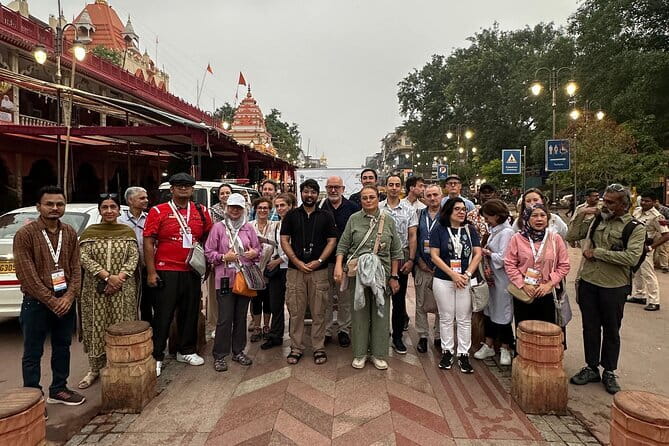
The tour kicks off at Chandni Chowk View Point, right by Metro Gate 1 near Lal Qila in Chandni Chowk. That’s a smart choice. You’re starting where you can actually orient yourself, not deep inside a maze with no way back.
Your first stop is Chandni Chowk, a roughly 1.5km stretch packed with religious landmarks living side by side. The route focuses on how Old Delhi’s spiritual life overlaps in one place: Hindu temples, Jain derasars, mosques, churches, and gurudwaras share the neighborhood’s rhythm. It’s not just a list of buildings. A good guide helps you read the streets—who gathers where, what people are doing, and why the architecture feels woven into daily routines.
This part lasts about 30 minutes and doesn’t require an admission ticket. That makes it a strong early anchor: you get the “why this place works” context right away before the senses crank up later.
Practical tip: wear shoes that can handle uneven pavement and expect people moving in all directions. You don’t need to fight for position—let the route set the pace.
Khari Baoli Spice Market: The Smell Test You Actually Want
Next comes Khari Baoli, described as Asia’s largest spice market, and yes, it earns that reputation. This stop is built around sensory reality: aroma, color, and the kind of busy you feel in your shoulders and nose.
You’ll spend about 30 minutes here, with spice tasting included. That matters more than watching spices get sold, because you’re learning by doing. And the guide adds the historical angle: how spice trade routes in medieval India helped shape what moved where—and what that legacy looks like in a market that still dominates parts of Delhi’s wholesale economy.
If you like food history, this is one of the most satisfying segments on the route. It explains the present using the past, without turning the market into a museum. You’re seeing a working supply chain and learning why it grew.
One caution: if you’re very temperature-sensitive, plan to slow your pace and take small breaks. Markets like this can get intense fast, especially during warmer parts of the day.
Old Delhi by Tuk-Tuk: Saving Legs Without Missing the Lanes
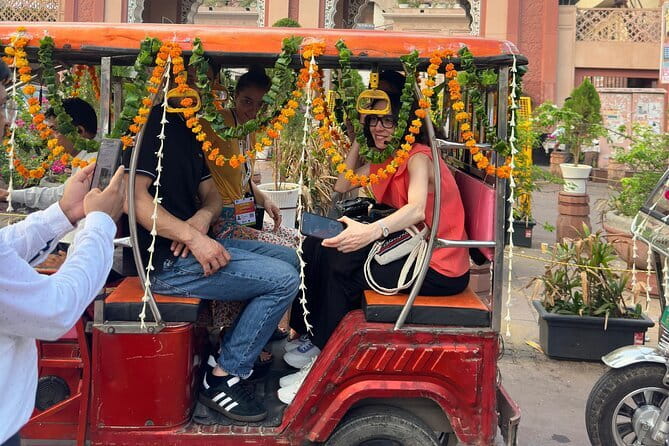
After the spices, you switch to the Old Delhi Rickshaw / tuk-tuk ride. It’s about 30 minutes, and it’s included—so you’re not doing the cost-benefit math while you’re already dealing with streets, crowds, and smells.
This segment functions like a shortcut through the neighborhood’s busy heart. The route weaves through centuries-old lanes, and the tour leans into what you notice naturally: the smell of frying samosas, the soundscape of temple bells, and the call to prayer (azan).
Even if you love walking, a vehicle ride here is a smart compromise. You still see street life up close, but you keep energy for the stops where the guide wants you to look carefully—architecture, details, and the specific photo angles you’ll miss if you’re just rushing from point to point.
This is also where a strong guide earns their pay. Lanes in Old Delhi don’t forgive guesswork. A competent guide helps you avoid getting lost, helps you stay on the route, and keeps the ride feeling like part of the story instead of a random transport break.
Naughara and the Row of Nine Houses: A Jain Stop That Cools the Noise

You’ll then move to Naughara – Row of Nine Houses, with another 30-minute stop. This is a quieter, more photogenic moment in the middle of a tour that otherwise pulls you through high-energy streets.
The highlight here is a Jain temple set among alleyways—described as offering peace and clarity compared with the surrounding commotion. You get time to slow down and notice details like intricate carvings and the spiritual atmosphere that makes some of these older corners feel separate from the rush outside.
The tour also frames this stop with oral histories—how people remember places, and how meaning sticks to stone and street corners. You’re not just taking photos. You’re being taught how to read what you see.
Practical consideration: because this is a calm pause, it can feel like a reset button. If you’re tired, use the moment to catch your breath and refocus. If you’re energized, this is a great time to ask your guide about what you’re seeing—Jain architecture and symbolism often reward curiosity.
Jama Masjid Finale: Mughal Architecture and Rooftop Views
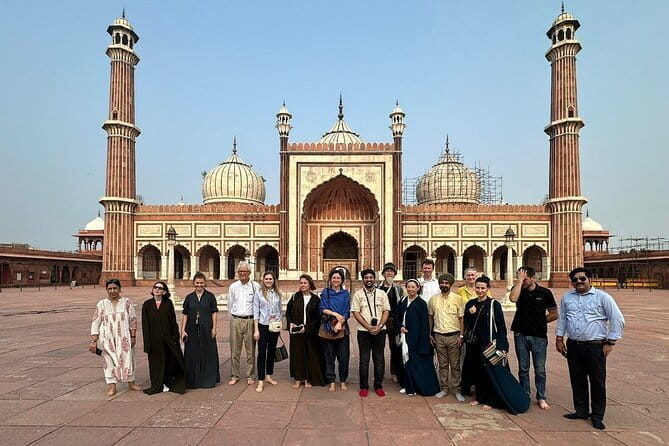
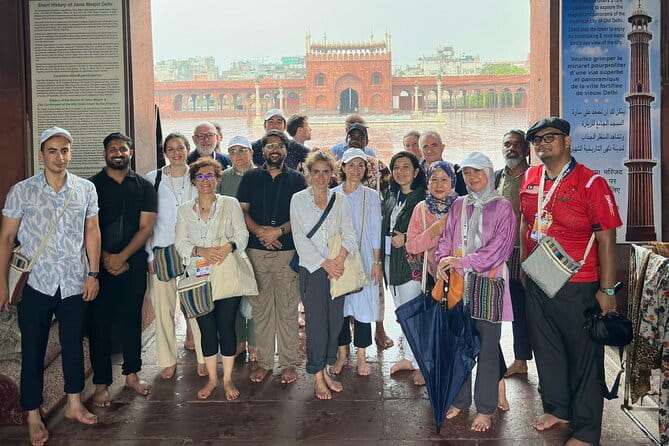
The walk ends at Jama Masjid, with about 1 hour at the site. Jama Masjid is presented as one of India’s largest and most beautiful mosques, built in red sandstone and white marble with Mughal architecture that’s meant to be seen from multiple angles.
This stop isn’t framed as a dead monument. It’s treated as a living symbol of Old Delhi’s spiritual center. And the overview includes a panoramic rooftop view from Jama Masjid, which is a major payoff: you finally get height, perspective, and a visual map of how the neighborhood spreads below.
There’s one catch you should plan for: Jama Masjid admission isn’t included. That means you’ll likely pay on-site, so budget a little extra and keep a bit of flexibility in your timing. The tour also ends at Jama Masjid gate number 3, which is helpful. It gives you a clear exit point so you’re not wandering while deciding how to go next.
This is also the best moment for photos that show both the structure and the surrounding Old Delhi scene. If you’re a photographer, arrive ready to shoot quickly—this tour segment is time-based, and you’ll want to maximize your rooftop/view time.
Why Lareb’s Style Feels Different Than a Generic Walk

The concept of the tour comes from Anas Khan, an anthropologist and history writer who grew up in these lanes. That background matters because it shapes the “why” behind what you see—especially the religious mixing across neighborhoods that can otherwise feel overwhelming.
On the ground, your experience can hinge on the guide. In reported experiences, the guide Lareb stands out for doing the practical work that makes Old Delhi easier. People have described him as informative and entertaining, but more importantly, he’s been willing to handle last-minute changes—helping accommodate timing and coordinating transportation so the day doesn’t collapse into confusion.
That’s the kind of support you want on a short tour. Two to three hours passes quickly. When the guide helps you move smoothly through crowded areas, you end up spending more time looking and learning—and less time figuring things out.
Price Breakdown: Why $19.01 Can Be a Good Deal Here

At $19.01 per person, this tour is priced in the “budget-friendly but not bare-bones” zone. The value comes from bundled items that would cost you time or money if you tried to DIY:
- Local expert guide for the full route
- Tuk-tuk ride included (a big one here)
- Bottled water, plus coffee and/or tea
- Spice tasting at Khari Baoli
- Mobile ticket, plus group discounts listed as a feature
What’s not included is equally important:
- Hotel pick-up and drop-off
- Shopping in the markets
- Jama Masjid admission ticket
So the deal works best when you can get to the meeting point on your own and you’re okay paying an extra fee at the end for Jama Masjid. If you’re starting from central Delhi, that’s usually manageable—and the included tuk-tuk ride plus guided explanation helps you get a lot for a low total price.
Getting Ready: What Helps You Enjoy Old Delhi More

This is a short tour, around 2 to 3 hours, but it packs several distinct environments into that time. You’re moving from street landmarks to a working spice market to a ride through lanes and then to a major mosque.
To make it comfortable:
- Wear comfortable shoes. You’ll be on foot for a meaningful chunk of the route.
- Expect strong smells and crowds, especially during the Khari Baoli segment.
- Plan your day around the fact that the tour ends at Jama Masjid gate 3, so you’ll want a simple next step ready.
The tour also notes that it’s near public transportation, service animals are allowed, and most people can participate. If you have mobility concerns, the biggest variable is the amount of walking between stops rather than the included vehicle segment.
And don’t forget: shopping isn’t included, but markets will tempt you. If you want to buy spices or souvenirs, treat it as optional, not part of the tour requirement.
Should You Book This Old Delhi Food, Culture & Spice Bazaars Walk?
I think you should book this tour if you want Old Delhi in a tidy time box: food + culture + sacred landmarks without you needing to stitch the route together yourself. The spice tasting at Khari Baoli and the included tuk-tuk ride are the two biggest reasons the experience feels efficient for the money.
Book it especially if you care about stories tied to place—how different faiths share the same streets, and how spice trade history still shows up in today’s market life. If smooth logistics matter to you, the guide experience reported around Lareb is a reassuring signal.
Skip it—or at least go in with eyes open—if you prefer quiet sightseeing. Khari Baoli is sensory-heavy, and Old Delhi streets are always crowded with real-world activity.
If you’re aiming for a first taste of Old Delhi, this is a solid way to get your bearings fast, eat and smell your way through the neighborhood, and finish with a high-perspective view from Jama Masjid.
FAQ
How long is the Old Delhi Food, Culture & Spice Bazaars walking tour?
The tour runs about 2 to 3 hours.
Where do I meet and where does the tour end?
You start near Chandni Chowk at Shop No 24, Metro Gate 1, opposite Lal Qila, in Lajpat Rai Market. You end at Jama Masjid, at gate number 3.
What’s included in the price?
Included items are bottled water, coffee and/or tea, a local expert guide, the tuk-tuk ride, and admission is listed as included for Khari Baoli and the tuk-tuk and Jain temple stops. Spice tasting is included at Khari Baoli.
Is Jama Masjid admission included?
No. Jama Masjid admission is listed as not included, so you should expect to pay that separately.
What’s the start location’s area like for getting there?
The meeting point is described as near public transportation, and the tour start is connected to Metro Gate 1 at Chandni Chowk.
What’s the cancellation policy?
You can cancel for a full refund if you do it at least 24 hours before the experience’s start time. If you cancel less than 24 hours before, the amount paid is not refunded.