REVIEW · JAIPUR
Explore Jaipur in a Tuk Tuk
Book on Viator →Operated by Rajasthan Tour Car Driver · Bookable on Viator
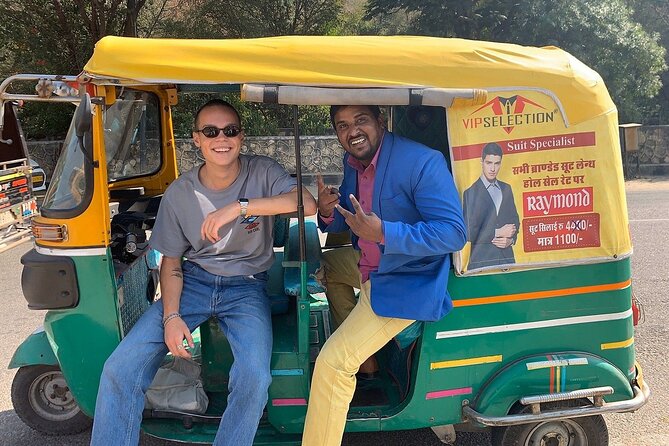
A tuk-tuk makes Jaipur feel close-up. You get a private ride with an English-speaking storyteller, sliding from flower colors to royal buildings to hill views without wasting time. The day is also customizable, so your route can flex if you spot something you want to linger over.
Two things I really like: hotel pickup/drop-off that keeps the morning painless, and the tight mix of major sights plus a hands-on stop for block printing. One possible drawback: several major monuments list admission as not included, so your final total may depend on which option you choose.
In This Review
- Key Points You’ll Feel on Day One
- Why a Tuk-Tuk Works for Jaipur’s Big Sights
- Pickup, Timing, and How 7 Hours Actually Maps Out
- Flower Market (Phool Mandi): Your Color Reset in 30 Minutes
- Hawa Mahal and Jantar Mantar: Wind Views and Sky Science
- City Palace Courtyards: Where Royal Spaces Feel Like Real Rooms
- Royal Gaitor Tombs: Marble Carvings and a Quiet Pause
- Jal Mahal on Man Sagar Lake: The Water Palace Moment
- Monkey Temple (Galta Ji): Hills, Sacred Tanks, and Yes, Monkeys
- Block Printing Factory Demo: A Hands-On Ending
- English Storytelling and the Driver Who Keeps It Easy
- Price and Logistics: Is $6.79 a Good Deal?
- Practical Tips for a Smooth Tuk-Tuk Day
- Should You Book This Jaipur Tuk-Tuk Tour?
- FAQ
- How long is the Jaipur tuk-tuk experience?
- Is hotel pickup and drop-off included?
- Is this tour private?
- What’s included in the price?
- Are monument entrance fees included?
- Is block printing included?
- Can the itinerary be customized?
- What if plans change and I need to cancel?
Key Points You’ll Feel on Day One
- Private tuk-tuk + pickup: You start and finish with minimal hassle.
- English-speaking storyteller: You’re not just looking at buildings; you get context.
- A smart sight order: Markets early, palaces and astronomy mid-day, hill temple later.
- Block printing demo: You’ll see how the traditional print process works.
- Time to adjust: The itinerary can be tweaked to match your pace.
- Bottled water and all transport charges included: Fewer small add-ons during the ride.
Why a Tuk-Tuk Works for Jaipur’s Big Sights
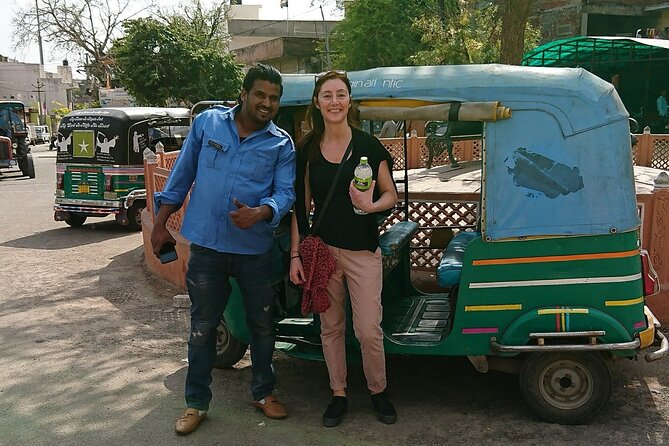
Jaipur is a city where traffic and distance can eat your day. A tuk-tuk tour helps you get your bearings fast and keep moving between highlights without the constant logistics of taxis or rideshares. Plus, being in your own vehicle means the pace stays yours, not the group’s.
I also like that this tour is built around variety. You’re not stuck with only palaces, or only markets, or only forts. You’ll bounce from flower stalls to wind architecture to instruments built for the sky, then end with artisans printing cloth.
Pickup, Timing, and How 7 Hours Actually Maps Out
This is an approx. 7-hour experience with hotel pickup and drop-off by tuk-tuk. The schedule is paced with real stop blocks: about 30 minutes at the flower market, then longer chunks at the biggest sites like City Palace (about 2 hours).
Start times matter. Beginning at the Flower Market works because you get a lively look at daily life early, when the place is buzzing with fresh blooms. If you prefer quieter photos later in the day, you’ll want to plan your own photo priorities once you’re out on the route.
Also note the “private” nature. Only your group participates, so you’re not waiting on strangers to return from the restroom or slow down at a view. That kind of small friction adds up in Jaipur, and private time helps.
Flower Market (Phool Mandi): Your Color Reset in 30 Minutes

You begin at the Jaipur Flower Market, also known as Phool Mandi. It’s an early-morning market where vendors sell fresh flowers like marigolds and roses, and you can feel the trade in motion—the smells, the colors, the quick bargaining energy.
This first stop is a smart warm-up. The palaces and temples later can feel like information overload, and starting with something sensory gives your brain a breather. You’ll also get a quick sense of how Jaipur lives beyond monuments.
Practical tip: keep a little space in your plans for photos here. If you want close shots of flower colors, that 30 minutes disappears faster than you expect.
Hawa Mahal and Jantar Mantar: Wind Views and Sky Science
Next comes Hawa Mahal, the Palace of Winds. You’ll see the distinctive façade built in 1799 by Maharaja Sawai Pratap Singh, designed with many openings so breezes could move through. It’s one of those Jaipur scenes that feels instantly recognizable once you’re looking at it.
Then you move to Jantar Mantar, the astronomical observatory complex founded by Sawai Jai Singh. It includes 19 astronomical instruments and was completed in 1734. It’s a good change of pace after palaces because it pushes you from art-and-power into science-and-measurement.
How I’d think about this pairing: Hawa Mahal gives you the visual language of Jaipur royalty—ornament, design, and symbolism. Jantar Mantar gives you the practical reason people built monumental spaces: to track the sky. Together, they make the day feel like more than sightseeing photos.
Money note: both stops list admission as not included, unless you selected the option that includes monument entrance fees.
City Palace Courtyards: Where Royal Spaces Feel Like Real Rooms
At City Palace, you’ll spend around 2 hours moving through a complex of courtyards, buildings, pavilions, gardens, and temples. It’s not one single room you rush through; it’s a layout that rewards slow attention, especially if your storyteller is guiding you through what you’re seeing.
The palace complex is the kind of place where small details matter: the way spaces connect, the way courtyards open up, and how different sections have different textures and vibes. If your day feels rushed elsewhere, City Palace is the stop where you can breathe and let the place explain itself.
Admission note again: City Palace is listed as not included for that stop, unless the fee-inclusive option is chosen.
Royal Gaitor Tombs: Marble Carvings and a Quiet Pause
The Royal Gaitor Tombs offer a calmer tempo. You’re looking at cenotaphs dedicated to the royal family, located near the foothills of the Aravalli Range. Expect intricate marble carvings and a mix of Rajput and Mughal influences.
This stop works well in the middle of the tour because it slows your eyes down. After architecture like Hawa Mahal and the instrument surfaces at Jantar Mantar, Gaitor gives you space for detail and reflection. You’re also closer to the hills here, which can make the air feel different from the city center.
The duration is about an hour. Don’t treat it as a quick photo stop. Those carvings take time to notice, and your storyteller can help point out what to look for.
Jal Mahal on Man Sagar Lake: The Water Palace Moment
Then you visit Jal Mahal, meaning Water Palace. It’s an 18th-century structure built by Maharaja Madho Singh I, located in the middle of Man Sagar Lake. The design blends Rajput and Mughal styles, which helps explain why it looks so distinct in photographs.
This is one of those Jaipur moments where you pause and look back at the scene. The whole point is the contrast: palace architecture sitting in the water setting. If you’re the type who likes skyline-style views, you’ll likely enjoy this stop a lot.
Because the tour data doesn’t state an admission fee for Jal Mahal in the same way as other stops, plan for the possibility that fees depend on your selected inclusion option.
Monkey Temple (Galta Ji): Hills, Sacred Tanks, and Yes, Monkeys
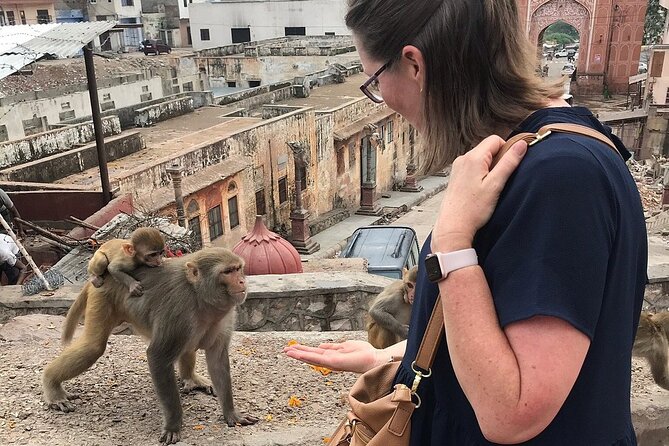
Next is the Monkey Temple, also known as Galta Ji. It’s a historic Hindu pilgrimage site in the Aravalli Hills near Jaipur. You’ll see sacred water tanks and a large monkey population, plus peaceful surroundings and viewpoints.
This stop is memorable, but it’s also where you’ll want to be practical. The presence of monkeys means you’ll want to keep hands and bags secure and avoid anything that looks like food. Also, you may find yourself walking on uneven ground, so comfortable shoes help.
Time is about an hour. Use it for photos from viewpoints and for the tanks area, if that’s where your storyteller takes you first. The charm is that it feels like a functioning place of worship, not only a tourist set.
Block Printing Factory Demo: A Hands-On Ending
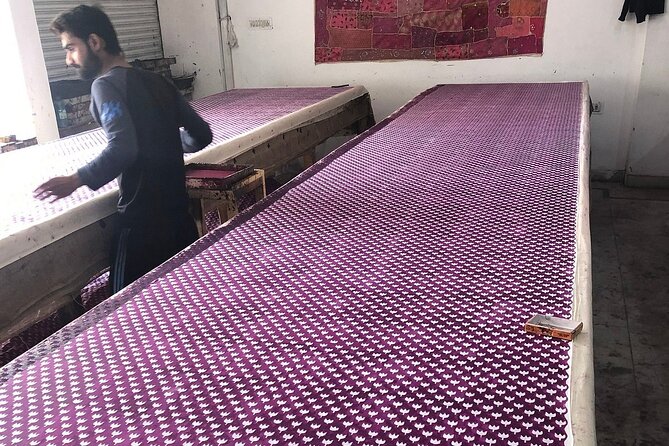
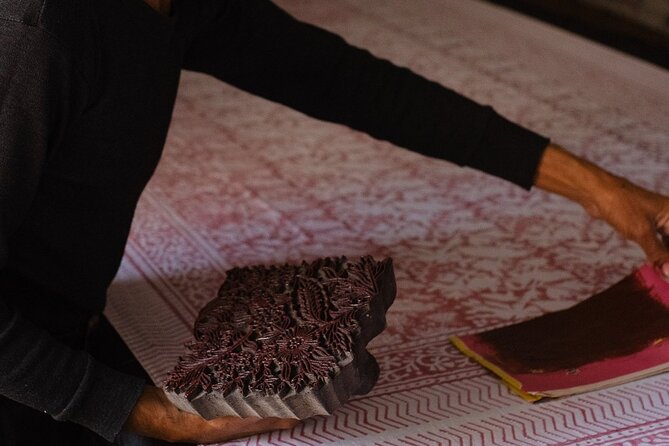
The day closes with Jaipur Block Printing, a live demonstration of traditional block printing. You’ll watch the process and meet skilled artisans, then learn about how the techniques work.
This is a great way to end because it turns you from observer into student. You’ll leave with a better sense of the craft behind the souvenirs you see later. It also gives you something to talk about besides palaces: ink, stamps, alignment, and the step-by-step workflow.
Admission here is listed as free for the demo.
English Storytelling and the Driver Who Keeps It Easy
One of the top praised aspects of this kind of tour is how smooth it feels when the driver is actually good at the job. People often highlight guides and drivers by name, including Firoj and Mehboob, plus Firoz in other cases, for being kind, professional, and flexible with the route.
Here’s what that means for you in real life. If you want to spend more time at a stop because something grabs your attention, the customizable nature matters. And if you’re unsure about where to eat, a good driver can usually suggest a local restaurant option. In particular, one day-turned-success story included recommendations for lunch and even a lassi spot.
You should still plan to buy meals yourself, since meals aren’t included. But the tour can help you land in the right place without wasting time hunting while you’re hungry.
Price and Logistics: Is $6.79 a Good Deal?
The price shown is $6.79 per person for about 7 hours, which is strikingly low for a private-style tuk-tuk day with pickup, bottled water, fuel, and parking. The real value comes from what’s bundled: transport costs are handled, and you’re not juggling multiple tickets just to move between sites.
The main variable is monument entrance fees. For several stops (like Hawa Mahal and Jantar Mantar, plus City Palace and Gaitor), admission is listed as not included unless you choose the option that includes them. So your total cost might rise depending on what’s selected.
My advice: before you confirm, check whether you selected the entrance-fee inclusion option. If not, budget for admissions at the major monument stops. If yes, you can focus your spending on snacks, drinks, and whatever artisan pieces you decide to bring home.
Practical Tips for a Smooth Tuk-Tuk Day
You’ll be on the move for most of the day, so plan like a pro. Wear breathable clothes in the day heat and bring a light layer for mornings and evenings if you run cold. Since bottled water is included, you’re covered there, but having a small pack for personal items helps.
For photos, think smart. Start with wide shots for Hawa Mahal and City Palace courtyards, then save your detailed close-ups for spots where you can slow down like Royal Gaitor Tombs and the block printing demo. Jal Mahal shots often benefit from finding a clear angle and waiting a moment for the light.
Finally, ask your English-speaking storyteller what to focus on at each stop. When someone points out what matters, your time feels longer—even if the clock doesn’t.
Should You Book This Jaipur Tuk-Tuk Tour?
I’d book this if you want a private, easy-feeling day built around Jaipur’s best-known sights, plus one cultural stop that’s not just monuments. It’s especially good for first-timers who want structure, and for small groups who prefer to move at their own pace instead of waiting around.
I’d think twice if you hate paying extra for admissions at major sites. The tour price looks great, but entrance fees may be separate unless you choose the inclusion option. Also, if you want only one or two stops and a long, slow day, this tour’s schedule is pretty packed.
If you’re flexible and you like a day that combines art, architecture, science, and craft, this is a solid way to see Jaipur without turning your trip into a puzzle.
FAQ
How long is the Jaipur tuk-tuk experience?
It’s listed as approximately 7 hours.
Is hotel pickup and drop-off included?
Yes. You get convenient hotel pickup and drop-off by tuk-tuk.
Is this tour private?
Yes. It’s private, so only your group participates.
What’s included in the price?
The tour includes a private tuk-tuk with an English-speaking driver/storyteller, bottled water, fuel, parking, and other charges. Guide or monument entrance fees are included only if you select the option for them.
Are monument entrance fees included?
Not by default. Monument entrance fees are included if you select the option that includes them.
Is block printing included?
Yes. You’ll attend a block printing art factory for a live demonstration and meet artisans. The demo admission is listed as free.
Can the itinerary be customized?
Yes. The trip is customizable, so you can adjust the itinerary and visit more places as desired.
What if plans change and I need to cancel?
You can cancel up to 24 hours in advance for a full refund. Cancellation within 24 hours of the start time isn’t refunded.