This route hits the big icons fast. In three days you cover the classic Delhi–Agra–Jaipur loop with a private guide and an air-conditioned car, plus little extras like onboard WiFi and water during drives. The standout is the sunrise Taj Mahal plan, paired with visits to Mughal Delhi, Agra Fort, Fatehpur Sikri, and major Jaipur sights.
I like how the Delhi day balances contrast: Old Delhi’s Jama Masjid and Chandni Chowk market energy, then New Delhi’s grand monuments like Humayun’s Tomb, India Gate, Parliament House photo stops, Qutub Minar, and the Lotus Temple. I also appreciate that you can expect real human expertise—guides such as Azam (often praised for strong storytelling and photography help) and Abar (frequent mentions for Jaipur pacing and great explanations).
One thing to consider: this is fast-paced and some major places are exterior-only photo stops (Red Fort from outside; Hawa Mahal and Jal Mahal also without entry). Also, Taj Mahal requires an early departure, so it’s not a slow-morning kind of trip.
In This Review
- Key highlights at a glance
- Golden Triangle Basics: What You’re Really Getting in 3 Days
- Day 1 in Delhi: Jama Masjid, Chandni Chowk Rickshaw, and Qutub Minar to Lotus Temple
- Jama Masjid to Chandni Chowk by rickshaw
- Red Fort from outside: good photos, no long detour
- Humayun’s Tomb and New Delhi landmarks
- Qutub Minar and Lotus Temple: two different kinds of awe
- Day 2: Taj Mahal Sunrise, Agra Fort, and Fatehpur Sikri on the Way to Jaipur
- 6AM pickup and the sunrise Taj Mahal plan
- Agra Fort after breakfast: power, not just beauty
- Fatehpur Sikri: a strong stop that prevents wasted driving time
- Arrival in Jaipur around 7PM
- Day 3 in Jaipur: Jaigarh and Nahargarh Forts to City Palace, Jantar Mantar, and Picture Stops
- Jaigarh Fort: fort walls and big-space thinking
- Nahargarh Fort: a shorter stop with great viewpoints
- Jal Mahal and Hawa Mahal: iconic images without interior entry
- City Palace and Jantar Mantar: where the city explains itself
- Patrika Gate and finishing around 2PM
- What’s Included That Actually Matters on the Ground
- Price and Value: The $20-per-Person Question (And the Real Answer)
- Real-World Tips for Making This Trip Feel Good
- Start early with a plan
- Expect picture-heavy stops at Jal Mahal and Hawa Mahal
- Use your guide for context and timing
- Wear shoes for uneven ground
- Who This Golden Triangle Tour Suits Best
- Should You Book This Tour?
- FAQ
- Is pickup and drop-off included?
- Do I get a guide during sightseeing?
- Are monument entrance fees included?
- Do I get hotel accommodation?
- What meals are included?
- Is there WiFi and bottled water on the trip?
- What time is the Taj Mahal sunrise pickup?
- What if my tour includes a Friday?
- Can I cancel for a full refund?
Key highlights at a glance
- Sunrise Taj Mahal timing with a 6AM pickup and a battery bus ride inside
- Old Delhi to New Delhi contrast: Jama Masjid, Chandni Chowk rickshaw ride, then Humayun’s Tomb and Qutub Minar
- Fort viewpoints in Jaipur across Jaigarh and Nahargarh
- Fatehpur Sikri stop on the transfer day so you don’t lose the day’s driving time
- Private group setup with a car sized to your number and local guides throughout
Golden Triangle Basics: What You’re Really Getting in 3 Days
Let’s be honest: the Golden Triangle can feel like a highlight reel. This tour works because it keeps moving while still giving you guide time at each key stop. You’re not just dropped at a gate—you get guided context at monuments that shaped how this region built power, art, and city life.
You’ll spend Day 1 threading together Old and New Delhi. Day 2 is the classic Agra day, arranged around early light at the Taj Mahal. Day 3 turns toward Jaipur’s royal skyline: forts first, then palaces, the observatory, and a few places where you’ll mainly take pictures.
Value-wise, the headline price ($20 per person) is unusually low for a private, guided multi-city experience. The catch is that “all inclusive” depends on what option you choose—entrance fees and hotel can be included only if you book the relevant option. Still, even if you’re paying extra for tickets or hotel, the tour’s structure makes the days feel efficient.
Day 1 in Delhi: Jama Masjid, Chandni Chowk Rickshaw, and Qutub Minar to Lotus Temple
Delhi on Day 1 is about contrasts. One side is human-scale chaos and color; the other is monumental and geometric.
Jama Masjid to Chandni Chowk by rickshaw
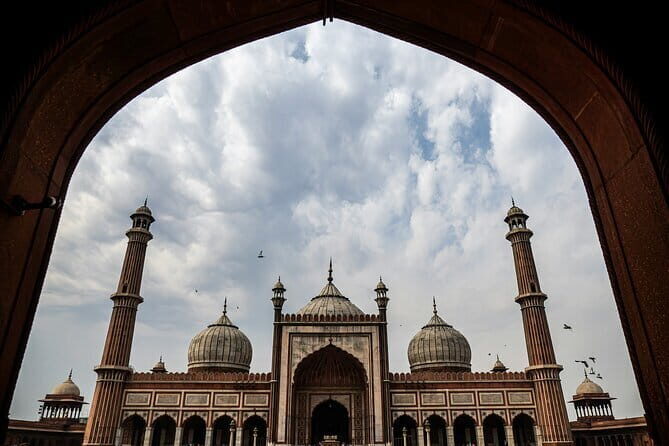
You start with pickup around 9:00 AM, then head to Jama Masjid, one of the best-known mosques in Old Delhi. After that, you’ll move into Chandni Chowk, the tight-street shopping area where spices and everyday trade dominate. The rickshaw ride is the smart way to experience the lanes without turning the day into a walking-only endurance test.
Practical note: Old Delhi lanes can be busy and uneven underfoot, so wear shoes you don’t mind getting warm and scuffed. Bring a small bottle of water if you run through it fast, even though you do get water provided during journeys.
Red Fort from outside: good photos, no long detour
You’ll then see the Red Fort from outside for photo stops. The reason given is that a large portion of the complex is held by the Indian Army, so this is a viewpoint experience rather than a full inside visit. That actually helps the day stay on schedule—if you want a “quick wow” of red sandstone walls without losing hours to lines and transfers, this works well.
Humayun’s Tomb and New Delhi landmarks
After a lunch break, you shift into New Delhi. Humayun’s Tomb is the next guided highlight. It’s a Mughal monument with a garden-plan layout that helps you understand the style the empire used across major tomb architecture.
Then you drive past India Gate and Parliament House for picture stops, letting your guide explain the historical background as you go. These are not stop-and-stroll moments, but they’re worth it for context, especially if it’s your first time in Delhi.
Qutub Minar and Lotus Temple: two different kinds of awe
You finish with two of Delhi’s most iconic “wow” stops:
- Qutub Minar (Qutb complex), where you get admission and a guided look at the minaret and its UNESCO-listed setting.
- Lotus Temple, free entry and known for its flower-like shape. It’s a calmer end to a full day, and it’s also a nice change of pace from the stonework of older Mughal and early Sultanate sites.
Day 2: Taj Mahal Sunrise, Agra Fort, and Fatehpur Sikri on the Way to Jaipur
Day 2 is the big ticket day. It starts early for a reason: you want the Taj Mahal when the light is softer and the crowd energy is lower.
6AM pickup and the sunrise Taj Mahal plan
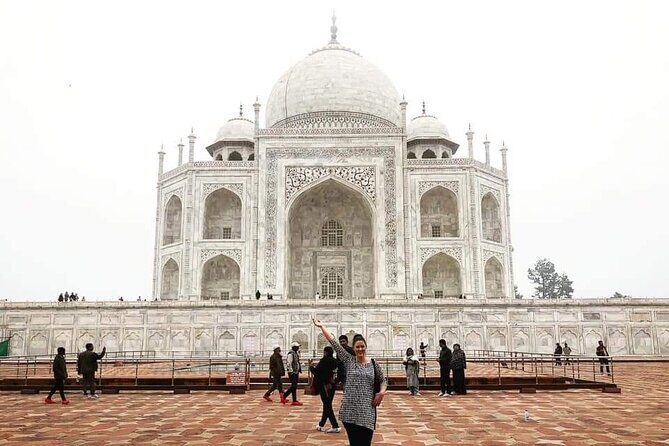
You’ll be picked up around 6:00 AM from your hotel for the Taj Mahal sunrise visit. Entrance is included, and the tour includes a battery bus ride. That detail matters because it reduces walking time when you’re arriving before the city really wakes up.
A good sign from the reviews: guides like Azam are praised for strong explanation and even practical photography help. If you care about photos, this is one of the days where a guide who understands angles and timing is worth its weight in gold.
Also, a quick expectation check: you’ll have a set amount of time at the complex (3 hours is the listed visit length), so don’t expect a slow museum-style pace. You’ll see the heart of it and get guided context.
Agra Fort after breakfast: power, not just beauty
After returning to the hotel and breakfast, you head to Agra Fort. This stop is included with admission and is roughly an hour in the schedule. It complements the Taj Mahal well: the Taj is romance and symbolism; the fort is control, defense, and empire engineering.
If you like understanding how rulers lived and protected their capital, Agra Fort gives you that side of the story without turning the day into a full archaeological seminar.
Fatehpur Sikri: a strong stop that prevents wasted driving time
Then you drive toward Jaipur and stop at Fatehpur Sikri Fort, a 16th-century Mughal-founded city just west of Agra. It’s included with admission, and it sits in a one-hour window.
This is a smart use of transit time. Without it, the day could feel like nothing but car hours. With it, you get another major architecture site and another layer of Mughal-era ambition.
Arrival in Jaipur around 7PM
You reach Jaipur around 7:00 PM, check in, and stay overnight. The listed day suggests you’re done sightseeing for the day, which is exactly how it should be after a long route. When you’re making a tight trip across three cities, rest becomes part of the itinerary quality.
Day 3 in Jaipur: Jaigarh and Nahargarh Forts to City Palace, Jantar Mantar, and Picture Stops
Jaipur Day 3 is about royal geography—forts and palaces tied together by views and design.
Jaigarh Fort: fort walls and big-space thinking
Pickup is 8:00 AM, and you start with Jaigarh Fort. It’s included and scheduled for about two hours. Jaigarh’s main value for most people isn’t just the walls—it’s the sense of height and defensive planning. You get that elevated perspective that makes Jaipur feel like it was built as much for strategy as for ceremony.
Nahargarh Fort: a shorter stop with great viewpoints
Next comes Nahargarh Fort (admission included). It’s connected to Jaigarh by an extended wall, and it’s also known by another name, Sudarshangarh, with the meaning Nahargarh as abode of tigers. Expect a one-hour window that focuses more on viewpoints and key parts of the fort than on a deep, multi-gallery visit.
Jal Mahal and Hawa Mahal: iconic images without interior entry
You’ll then stop for Jal Mahal, the palace in the middle of Man Sagar Lake. Entrance is prohibited, but the timing and photo access still make it worth the pause. Later, you’ll have the same idea at Hawa Mahal (Palace of Winds)—picture first, no inside entry.
These “exterior-only” notes are not a flaw; they’re how this tour keeps the day moving through major sites. If you want inside access at every palace, you may prefer a different style of tour. If you want the famous shapes and great photos, this format fits nicely.
City Palace and Jantar Mantar: where the city explains itself
After the fort-and-photo loop, you go to City Palace of Jaipur with admission included. It’s scheduled for about two hours, which is enough time to appreciate how the palace complex links to the city’s power structure.
Then it’s Jantar Mantar, the observatory with nineteen architectural astronomical instruments. You get about an hour here with admission included. If you like seeing how science and statecraft braided together in the Rajput era, this is a satisfying stop because it feels purposeful rather than decorative.
Patrika Gate and finishing around 2PM
You end with Patrika Gate, a great photo spot, and around 2:00 PM your Jaipur sightseeing ends. From there, you can head back to Delhi (or to the airport), depending on what you arranged.
What’s Included That Actually Matters on the Ground
Here’s where this tour earns its keep. Included items aren’t just checkboxes—they reduce friction.
- Private local guides at the monuments: this is the difference between seeing things and understanding them.
- Air-conditioned vehicle and WiFi on board: saves you during Delhi and highway drives when heat and traffic can drain you.
- Pickup and drop-off assistance: helps you avoid the hassle of figuring out transit on your own.
- Rickshaw ride in Old Delhi and battery bus ride at Taj Mahal: these aren’t flashy add-ons; they protect your time and energy.
- Bottled mineral water and soft drinks during journeys: nice for long drives when you might not want to stop constantly.
- Breakfast (2) if you choose the hotel option: this supports the early mornings and keeps you from hunting for food right after big sights.
One more practical detail: the vehicle type changes with group size (sedan for 1–2 people, SUV for 3–5, mini coach for larger groups). That matters because a too-small car is miserable in India traffic.
Price and Value: The $20-per-Person Question (And the Real Answer)
At $20 per person, the headline price is hard to beat for a private multi-day Golden Triangle experience. The real value question is what you’re also paying for via options.
Based on what’s listed:
- Entrance fees are included only if your option books monument entrance fees.
- Hotel for 2 nights is included only if you choose the hotel option.
- Meals beyond the listed breakfasts are not included, and tips are not included.
So here’s how I’d think about it: if you select the option that covers entrance fees and hotel, you’re getting a tightly managed plan with transportation, guides, and smart rides inside key complexes. If you skip those options, you can still do the tour, but you’ll need to cover tickets and lodging on your own, which can shrink the “deal” feeling.
In either case, the schedule itself helps you see the major sites without wasting days on logistics. That’s the part you can’t always replicate on your own quickly.
Real-World Tips for Making This Trip Feel Good
This tour moves fast, so a few choices can make a big difference.
Start early with a plan
Taj Mahal sunrise means an early morning. If you’re the type who needs time to wake up, consider packing small essentials the night before (hat, light layer, and water). The tour gives you structure, but you still need to show up ready.
Expect picture-heavy stops at Jal Mahal and Hawa Mahal
Entrance is prohibited at Jal Mahal, and you won’t enter Hawa Mahal either. It’s still a great photo moment, but it won’t feel like a full palace visit. If that kind of trade-off bothers you, adjust your expectations or choose a different itinerary style.
Use your guide for context and timing
From the reviews, guides like Sameer and Azam are praised for clear explanations, plus help with pacing and photography. That’s the kind of service you should lean on: ask them about the best time for photos and the specific details to look for while you’re there.
Wear shoes for uneven ground
Old Delhi markets and fort areas can mean uneven pavement and lots of stairs or slopes. Comfortable walking shoes are not optional.
Who This Golden Triangle Tour Suits Best
This fits best if you want:
- A private, guided Delhi–Agra–Jaipur route without coordinating everything yourself
- Classic highlights packed into three days
- A balance of historical explanation and time-saving transport, including rickshaw and battery bus
It may not be ideal if you want a slow travel pace, or if you strongly prefer inside access at every major monument.
Should You Book This Tour?
Yes, if you want a well-run Golden Triangle with a good mix of guided monuments, transportation comfort, and photo-friendly additions. The standout advantage is how it handles the big draw—Taj Mahal at sunrise—and then keeps the rest of the days structured so you’re not just riding around.
Book it especially if you care about having a guide who can make the sites click. Names that come up repeatedly include Azam (Taj Mahal storytelling and photography help), Hari (driver praised for smooth care), Sameer (Agra day expertise), and Abar (Jaipur pacing and explanations).
If you’re someone who hates early starts or needs entrance access at every exterior “icon,” you should double-check which sights are photo-only on your chosen dates.
FAQ
Is pickup and drop-off included?
Yes. The tour includes pick-up and drop-off assistance from your preferred location and then back to the end point options described for the trip.
Do I get a guide during sightseeing?
Yes. The tour includes all sightseeing with private local guides across the stops.
Are monument entrance fees included?
Entrance fees are included only if you choose the option that covers monument entrance fees.
Do I get hotel accommodation?
Hotel accommodation for 2 nights is included only if you book the hotel option. You can also choose to book without hotel and arrange your own lodging.
What meals are included?
The tour lists breakfast (2) as included. It also notes that meals & drinks are not included beyond that.
Is there WiFi and bottled water on the trip?
Yes. There is WiFi on board and bottled mineral water and soft drinks during journeys.
What time is the Taj Mahal sunrise pickup?
The pickup for Taj Mahal sunrise is around 6:00 AM.
What if my tour includes a Friday?
If Friday falls on the 2nd day of the tour, the itinerary switches into Delhi–Jaipur–Agra–Delhi. If you book hotel on your own, you’re asked to message for the revised itinerary.
Can I cancel for a full refund?
You can cancel for a full refund up to 24 hours in advance. Less than 24 hours before start time is not refundable.