A fast route through three iconic cities.
This private Golden Triangle style tour is built for people who want big sights without the stress of planning every hop. You’ll get private transportation, an English-speaking guide, and city sightseeing paced across Delhi, Agra, and Jaipur with about 3 nights of hotel plus breakfast and dinners.
I especially like how the first day gives you orientation right away: Qutub Minar, Lotus Temple, India Gate, and key government landmarks all in one smooth loop. It’s a good way to understand Delhi’s layers in a short time, without feeling like you’re racing from place to place on your own.
My main caution is about budgeting and pace. Entrance fees aren’t included, and the itinerary stacks a lot of monuments plus long drives between cities, so you’ll want comfortable shoes and a “keep moving” mindset.
In This Review
- Key things that make this tour work well
- How the 4-day Golden Triangle tour flows (and why that matters)
- Delhi in one day: Qutub Minar, Lotus Temple, and India Gate
- Qutub Minar and the Qutb complex
- Lotus Temple for a modern reset
- India Gate, Parliament House, and Rashtrapati Bhavan quick stops
- Lunch and the drive to Agra
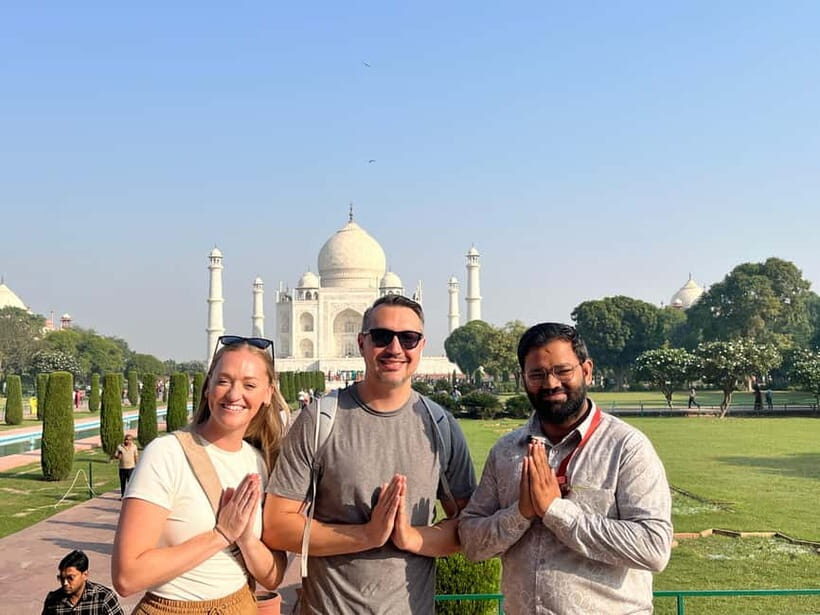
- Taj Mahal sunrise: what you get beyond the famous photo
- Taj Mahal (2 hours) and how to plan your time
- Agra Fort for Mughal power and scale
- Itmad-ud-Daula, often called the Baby Taj
- Lunch and the long drive to Jaipur
- Fatehpur Sikri on the way to Jaipur: a “bonus” stop that pays off
- Jaipur’s top hits: Hawa Mahal, City Palace, and the “look at it from every angle” day
- Hawa Mahal for the signature pink-city look
- City Palace: where you learn what the buildings are for
- Jantar Mantar for astronomy instruments
- Jal Mahal and Panna Meena ka Kund for contrasting textures
- Amer Fort with a private guide: the part that needs the right energy
- Hotels, meals, and transportation: where your money really goes
- Service style you’ll notice: punctual drivers, clean cars, and guides who manage the flow
- Practical tips before you go: tickets, comfort, and what to wear
- Should you book this Delhi–Agra–Jaipur private tour?
Key things that make this tour work well
- Private guide for each city so you’re not stuck with vague explanations or group schedules
- Taj Mahal sunrise with a battery-powered bus from the parking area to the monument
- 3 nights of hotel with breakfast and dinners, which keeps costs predictable
- Door-to-door pickup across Delhi, Noida, and Gurugram, plus hotel or airport drop-off
- Driver stays available during the trip if you want extra cab time for dinner or shopping
- A lot of high-impact stops in a tight time window, ideal for first-timers
How the 4-day Golden Triangle tour flows (and why that matters)
This is a classic Delhi–Agra–Jaipur circuit, done in a private format. The schedule is designed around two realities of North India: transit takes time, and the best monuments are worth seeing more than once (or at least in the right light).
You’re set up with private transportation in an air-conditioned car—a 4-seater sedan for 1–3 travelers, a 7-seater SUV for 4–6, or a 12-seater minivan/tempo traveler for 7–10. That matters because Golden Triangle touring is less about “how much you can walk” and more about how efficiently you can move between city areas that are spread out.
The structure is simple:
Day 1 is Delhi sightseeing then an Agra hotel check-in. Day 2 is Taj Mahal plus Agra sights, then a drive onward to Jaipur with a stop at Fatehpur Sikri. Day 3 is your full Jaipur day. Day 4 is a return trip to Delhi or a Jaipur airport drop-off after breakfast.
Delhi in one day: Qutub Minar, Lotus Temple, and India Gate
Day 1 is basically your Delhi crash course, with a mix of older Delhi and modern government symbolism. It’s not random—it’s the right blend for getting your bearings quickly.
Qutub Minar and the Qutb complex
You’ll start at Qutub Minar (part of the Qutb complex in Mehrauli). This site is tied to the older fortified city area, so it gives you a sense of how Delhi’s story runs far deeper than modern roads and high-rises. Your stop is planned for about one hour, and entrance fees aren’t included for monuments on this tour.
Practical note: the tour lists Qutub Minar’s entrance as $60 per person separately from the general monument fee. So when you budget, treat Qutub Minar as its own line item even if your guide helps manage ticket purchases.
Lotus Temple for a modern reset
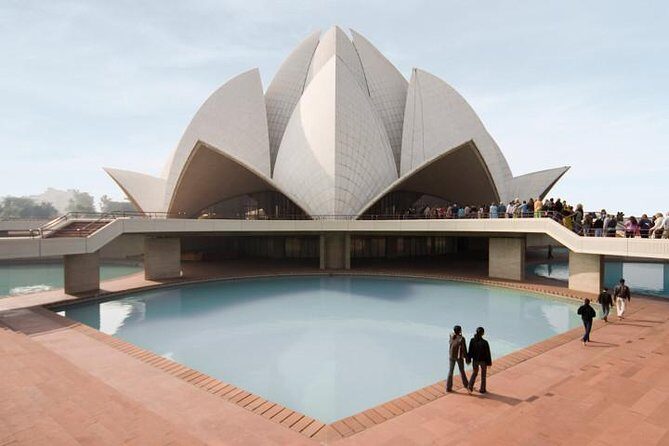
Next is Lotus Temple, the one shaped like a lotus flower. It was inaugurated in 1986, which is a useful contrast to the centuries-old stonework elsewhere in Delhi. You’ll have about 30 minutes here, long enough for photos and a quiet look around without turning it into a slow stop.
If you’re sensitive to noise, you’ll likely appreciate that this kind of stop tends to feel more controlled and calmer than street markets. Even in busy Delhi, Lotus Temple usually works as a mental reset.
India Gate, Parliament House, and Rashtrapati Bhavan quick stops
Then you’ll see India Gate (with construction completed in 1931), plus short orientation stops at Parliament House and Rashtrapati Bhavan. These are planned for around 30 minutes at India Gate, then only about 5 minutes for each government site.
This is one of the tour’s smartest moves: you get the landmarks without wasting half a day trying to “study” them. Think of these as photo checkpoints and context stops—your guide can tell you what these places mean, while you keep your energy for Agra.
Lunch and the drive to Agra
After Delhi stops, there’s scheduled time for lunch at a local restaurant, then you drive through Yamuna Expressway to Agra (about 3 hours, traffic dependent). The tour then moves you into an Agra hotel for your second night of sightseeing energy.
Taj Mahal sunrise: what you get beyond the famous photo
Agra day is anchored around one thing: seeing the Taj Mahal at sunrise. That timing is not just about aesthetics. Sunrise usually means cooler temperatures, softer light, and less chaos than later in the day. You’ll have around two hours at the Taj Mahal, and the tour includes the battery-powered bus transfer from the parking area to the monument.
Taj Mahal (2 hours) and how to plan your time
The Taj Mahal visit is listed for 2 hours. That’s a realistic window if you want to see the main views, take photos, and still have time to look closely at details without feeling rushed.
Entrance is not included, so you’ll rely on your guide to help with ticket purchase so you’re not stuck standing in lines. This is one of those small logistics wins that makes the whole morning feel smoother.
Agra Fort for Mughal power and scale
Next comes Agra Fort, planned for about one hour. This is tied to Mughal history and to Akbar’s era, and it also served as a power center across different dynasties. Agra Fort works well after Taj Mahal because it shows you the bigger political system behind the beauty—less romance, more authority and stone.
Itmad-ud-Daula, often called the Baby Taj
Then there’s Itmad-ud-Daula for about 30 minutes—a mausoleum often described as a “jewel box,” sometimes called the Baby Taj. This stop is perfect if you like architecture details and want a break from the “everyone stops here” intensity of the main monument.
If you’re worried about fatigue, this is where the pacing helps: it’s shorter than the Taj and Agra Fort, so you still end the day feeling like you gained something.
Lunch and the long drive to Jaipur
After lunch at a local restaurant, you’ll head to Jaipur. The drive is planned around 4 to 5 hours via NH-21. That’s a long stretch, so the included bottled water and soft drinks during journeys is a real convenience, not a throwaway perk.
Fatehpur Sikri on the way to Jaipur: a “bonus” stop that pays off
Your Day 2 route includes a stop at Fatehpur Sikri en route to Jaipur. The tour presents it as a small city just west of Agra, and that’s exactly how it plays in real time: you’re not fully re-building your day around it, but you’re getting a meaningful historical pause.
This matters because Fatehpur Sikri helps connect the dots between what you saw in Agra. It’s another chapter of Mughal-era ambition, and it gives you variety before your Jaipur monuments.
Expect this to feel like a classic “stop and see” site rather than a long, slow museum experience. Entrance fees for monuments aren’t included, so budgeting is still part of the plan.
Jaipur’s top hits: Hawa Mahal, City Palace, and the “look at it from every angle” day
Day 3 is your full Jaipur day, starting with the most recognizable silhouette in town.
Hawa Mahal for the signature pink-city look
You’ll see Hawa Mahal (Palace of Wind), a five-storey pink sandstone structure built in 1799. The windows—jharokhas—are the whole point. You’ll have about 30 minutes, which is enough to understand the design and get your best angles.
If you only have time for one quick photo stop, this is the one. It’s instantly Jaipur.
City Palace: where you learn what the buildings are for
Next is the City Palace of Jaipur for about two hours. The palace complex connects you to Rajput reign and to the royal layout of Jaipur’s core. You’ll see that it isn’t just one palace—there are multiple buildings within a larger complex, including areas referenced in the itinerary such as Chandra Mahal and Mubarak Mahal.
This stop tends to reward people who like context. If you’ve ever wondered why royal cities were built the way they were, City Palace is where you start to see the pattern.
Jantar Mantar for astronomy instruments
Then you’ll visit Jantar Mantar for about 30 minutes. The itinerary describes it as “instruments for measuring the harmony of the heavens,” with 13 architectural astronomy instruments.
This is one of those sites where you’ll enjoy it more if your guide explains what you’re looking at while you’re standing there. In short: don’t just walk past the structures—ask how they’re used.
Jal Mahal and Panna Meena ka Kund for contrasting textures
You’ll also stop at Jal Mahal, a palace in the middle of Man Sagar Lake, for about 30 minutes. It’s a quick visual treat: you see a palace form reflected in the water, then you move on.
After that comes Panna Meena ka Kund, a stepped well with diamond-shaped crisscrossing steps. It’s about 30 minutes as well, and it’s visually different from the royal palaces. If your feet are getting tired, this kind of stop can be a relief because you don’t need to climb through endless sections—though you’ll still want sturdy footwear.
Amer Fort with a private guide: the part that needs the right energy
The big Jaipur climax is Amer Fort, also noted as the former capital of Rajasthan until 1728. Your stop is planned for about two hours, and the itinerary lists it as admission free—though you should still confirm on the ground with your guide for the exact on-site permissions and any fees that may apply.
What makes Amer Fort valuable on a private format is how the guide can connect gates, courtyards, and fort structure to the bigger story of power and defense. You’re not just ticking off another fort—you’re learning how the fort shaped daily life, movement, and status.
Also: Amer Fort is the kind of place where timing and energy matter. If you’ve walked all day already, take your time inside and don’t rush photos. This stop rewards slow looking.
Hotels, meals, and transportation: where your money really goes
Let’s talk value, because price is the part you feel immediately.
The tour is listed at $300 for the full experience duration (about 4 days). In practice, that’s tied to what’s included: 3 nights accommodation, plus daily breakfasts and dinners. Those meals and hotel nights can be a big part of what makes this package feel reasonable compared to booking everything separately.
You also get private transport the whole time, including an AC vehicle and pickup/drop-off options in Delhi, Noida, and Gurugram. Add in bottled water during journeys, and the logistics feel handled instead of improvised.
Now the extras: entrance fees for monuments are not included. The itinerary lists monument entrance fees at $60 per person, and it lists Qutub Minar’s entrance fee separately as $60 per person. That means your final cost will depend on how the operator structures those tickets. Plan for it, and your guide will help you buy entrance fees so you’re not stuck in queues.
Finally, there’s a small but useful service detail: the driver can stay available for extra cab time for dinner at city restaurants or shopping. Not every tour gives you that flexibility, and it can help if you want to eat where locals eat rather than relying only on hotel routines.
Service style you’ll notice: punctual drivers, clean cars, and guides who manage the flow
This tour’s reputation in service circles comes up again and again, especially around transportation. People like the fact that the driver shows up on time, the car is clean and spacious, and there’s usually no deposit hassle. You’ll also get bottled water in the car, which sounds minor until you’re actually stuck in a long drive.
Guide involvement also matters here. Your guide is set up to help with entrance fees, and they act as the translator layer so you don’t waste time figuring things out on your own.
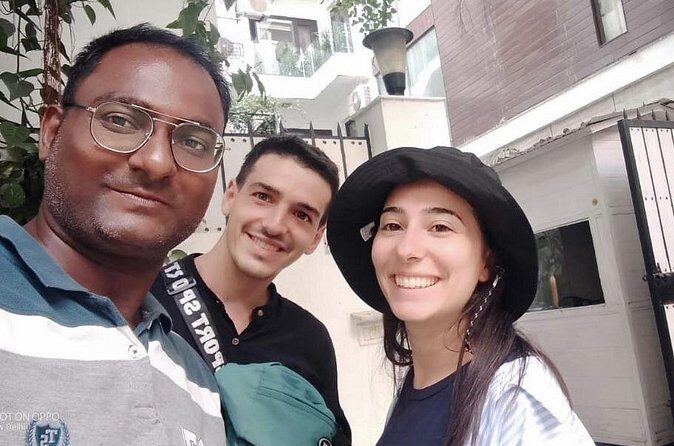
In the feedback I’ve seen attached to this kind of tour setup, names that pop up include Rajendera Dewan (often called Raj) and Sandip as drivers or service contacts. Other names mentioned include Aman and Param. That suggests the operator may staff multiple drivers and guides, which can be a good sign for availability.
One possible downside to keep in mind: with private services, you’re more exposed to the individual style of your specific driver. One report flagged a disappointing driver attitude even while other parts of the trip ran smoothly. In other words, it’s not “perfect service every time.” If your main priority is a very specific, high-energy guide personality, you might want to message the operator in advance with your tone preferences.
Practical tips before you go: tickets, comfort, and what to wear
This tour assumes a moderate physical fitness level. You won’t be doing extreme hikes, but you will walk through multiple monuments in three cities, often with short stop windows.
Here’s how to make it easier on yourself:
- Wear shoes you can stand in for 30–90 minutes at a time.
- Bring a light layer for early mornings, especially for sunrise Taj Mahal.
- Expect heat and dust in parts of North India—hydration is built in with bottled water during drives, but you should still drink regularly.
- Dress for temples and cultural sites. Covering shoulders and wearing sleeves that work under the sun is a simple win.
- Use the guide help for tickets. The tour is set up so you don’t wait in lines, but you still save time when you follow the guide’s instructions right away.
Also, don’t plan tight add-ons on transfer days. The drives are approximate and depend on traffic, which means your arrival time can shift.
Should you book this Delhi–Agra–Jaipur private tour?
I’d book this if you’re a first-timer to North India and you want the Golden Triangle highlights without wrestling with transport logistics. The biggest reasons are the private guide, the 3 nights hotel with breakfast and dinners, and the way the itinerary puts Taj Mahal at sunrise into a guided plan with the battery-bus transfer.
Skip it or reconsider if you hate early starts, tight schedules, or additional charges for entrance fees. Also consider whether you’re comfortable spending a lot of time in the car across consecutive days.
If you want a simple, high-impact trip structure—Delhi context, Agra icons, Jaipur royal sites—this kind of private Golden Triangle is built for that exact goal.