REVIEW · NEW DELHI
4 Days Private Golden Triange Tour to Agra and Jaipur from Delhi
Book on Viator →Bookable on Viator
Golden Triangle tours can feel formulaic. This one feels timed and guided, with a mix of Delhi Sultanate, Mughal, and Rajput-era sights plus a very early Taj Mahal visit.
I especially like the licensed guide focus on history, because it turns big monuments into clear stories instead of just photo stops. I also like the practical comfort details: a private air-conditioned car, professional driver, and even small in-car extras like mineral water and seasonal snacks during the intercity drive.
One thing to keep in mind: entrance fees aren’t included (about USD 45 per person for all monuments), and the Taj Mahal day starts with a 05:00 am pickup, so plan for an early wake-up.
In This Review
- Key highlights you’ll feel fast
- The Golden Triangle, but with a plan that makes sense
- Private transport details that actually matter on this route
- Delhi Day 1: From Rajpath memorials to iconic temples
- India Gate: a fast, moving introduction
- Qutub Minar: Delhi Sultanate scale in one UNESCO structure
- Lotus Temple: modern faith architecture with an easy flow
- Sansad Bhawan and the green-garden pause
- Swaminarayan Akshardham: a major complex with free entry
- Raj Ghat: the memorial you don’t rush
- Taj Mahal sunrise at 05:00 am: the one timing choice that changes the day
- Agra Fort and Itmad-ud-Daula: the Mughal story keeps going
- Agra Fort: Mughal power in fortress form
- Itmad-ud-Daula (Baby Taj): when you slow down
- Fatehpur Sikri: an abandoned Mughal capital feeling alive
- Jaipur Day 3: royal architecture, angles, and an observatory
- City Palace: Mughal and Rajput blend inside a living complex
- Hawa Mahal: the Palace of Breeze, built to look dramatic
- Jantar Mantar: 13 instruments measuring the heavens
- Jal Mahal: water palace for photos and a quick reset
- Albert Hall Museum: an indoor break with a wide artifact mix
- Day 4: the quiet ending and leaving Delhi
- Price and value: what $226.66 per person really buys
- Who this tour suits best
- Should you book this private Golden Triangle tour to Agra and Jaipur?
- FAQ
- Is Taj Mahal sunrise included in the tour?
- What’s included in the tour price?
- Are entrance fees included?
- What vehicle will I ride in?
- Is this a private tour?
- What is the cancellation window for a full refund?
Key highlights you’ll feel fast

- Sunrise Taj Mahal at 05:00 am with a guide meeting you on arrival
- UNESCO coverage across Delhi, Agra, and Jaipur (the tour promises 8 sites, including Qutub Minar, Taj Mahal, Agra Fort, and Fatehpur Sikri)
- Private vehicle in the comfort tier you need (sedan, Innova, or van based on group size)
- Clean, sanitized car after each travel day plus mineral water in the car
- A tight, well-structured loop: Delhi big monuments, then Agra/Mughal capital sites, then Jaipur royal landmarks
- Personal care in each city from the office representative (Delhi, Agra, Jaipur)
The Golden Triangle, but with a plan that makes sense
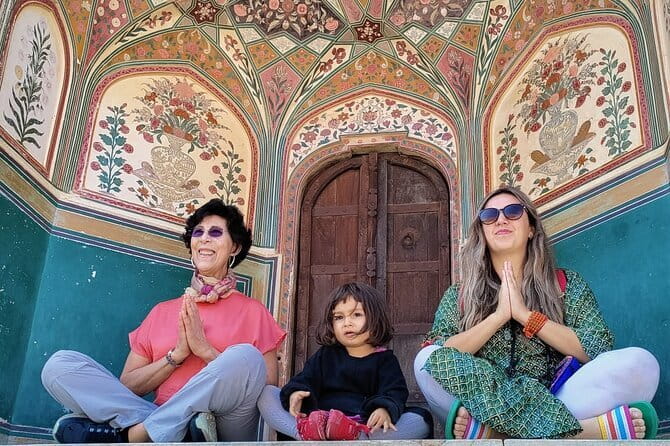
This 4-day private loop is built for people who want the classic India highlights without wasting half the trip figuring out timing. You cover Delhi, Agra, and Jaipur in a smooth circuit, and the day-by-day rhythm is designed around peak access—especially with the Taj Mahal sunrise slot.
You’ll also see how the Golden Triangle label really plays out on the ground. Delhi brings the layers of old empires and modern faith spaces. Agra leans fully into Mughal power and design. Jaipur then switches to Rajput architecture and the royal city vibe, with forts and palaces plus an observatory that still feels science-forward.
For many first-time visitors, the value is not just the destination list. It’s the sequence, and the fact that you have a professional driver handling the driving so you can focus on the sights.
Private transport details that actually matter on this route
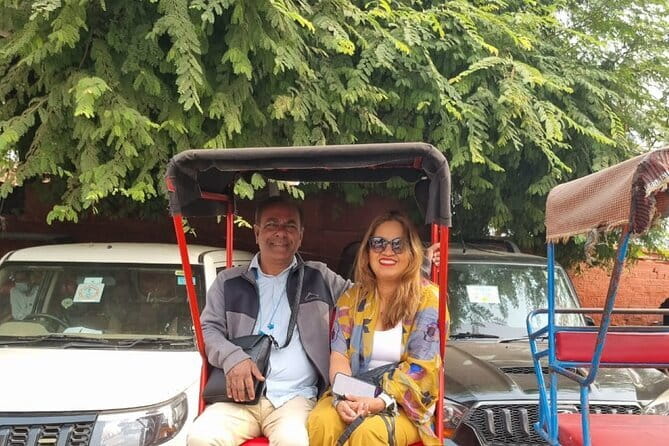
This tour is private, so you’re not merging with strangers or waiting around for other people’s pace. You ride in a private air-conditioned car, and the model changes by group size: a four-seater sedan for 1–2 people, a six-seater Innova for 3–4 people, and an 11-seater Tempo Traveller/van for 5–10.
That group-size detail matters more than it sounds. If you’re traveling as a small family or a couple, you get the sedan convenience. If you’re traveling with friends, the bigger vehicle keeps everyone together without squeezing.
Also, you’re not left guessing about the ride quality. The included car is described as cleaned and sanitized, and the tour also includes mineral water bottles in the car. During intercity travel, you’ll also have seasonal fruits and cookies/biscuits, which is a small but smart add-on on days that can be long.
Delhi Day 1: From Rajpath memorials to iconic temples
Day 1 is essentially your Delhi launchpad: a mix of landmark architecture, major religious sites, and a memorial stop. It’s also where you’ll notice the tour’s logic—each stop gives a different lens on Delhi’s identity.
India Gate: a fast, moving introduction
You start at India Gate, the war memorial near Rajpath, dedicated to soldiers of British India who were martyred fighting for India. It’s only about 30 minutes, but it sets a tone for the trip: this is not just sightseeing; it’s a city shaped by history and memory.
Qutub Minar: Delhi Sultanate scale in one UNESCO structure
Next is Qutub Minar, a UNESCO World Heritage site. The tower is about 73 meters tall and has five storeys, constructed in 1193 by Qutub-ud-din Aibak, founder of the Delhi Sultanate. This is the kind of place where having a guide matters because the structure is impressive—but the context is what makes it click.
Plan for about an hour here. And if you’re the type who likes to read architectural details, allow yourself a little extra time inside your head—even if the clock moves on.
Lotus Temple: modern faith architecture with an easy flow
Then comes Lotus Temple, one of Delhi’s most visited monuments, known for its flower-like design. It was built in 1986 and has won architectural awards. It’s a good contrast after older structures, and it’s also a calm stop in the schedule.
Sansad Bhawan and the green-garden pause
There’s also a stop at what’s listed as Sansad Bhawan, built in 1927 and designed by British architects Sir Edwin Lutyens and Sir Herbert Baker. The tour notes it’s surrounded by lush green gardens. This is the kind of stop that might feel like a photo break—until you realize you’re seeing the colonial-era imprint on India’s capital planning.
Swaminarayan Akshardham: a major complex with free entry
You then head to Swaminarayan Akshardham, described as a Hindu temple and spiritual-cultural campus. The complex is focused on traditional and modern Hindu culture and architecture. The tour lists the admission as free, and you’ll have about an hour.
A practical note: complexes like this can feel like a lot visually. If you want it to stay enjoyable rather than overwhelming, pick a few areas to focus on instead of trying to see everything.
Raj Ghat: the memorial you don’t rush
Finally on Day 1, you stop at Raj Ghat, the marble platform where Mahatma Gandhi was cremated on January 31, 1948. This one lasts about 30 minutes and is marked as free. You may not think of it as part of a typical “Golden Triangle” list—but it belongs here, because it brings the trip back to a human-scale story.
Taj Mahal sunrise at 05:00 am: the one timing choice that changes the day
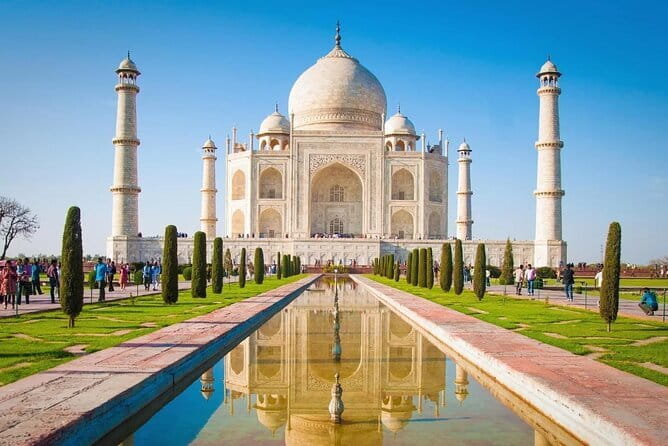
Day 2’s centerpiece is Taj Mahal with an early arrival. Your driver takes you there around 05:00 am, and your guide meets you for a guided tour lasting about two hours.
This is the part of the trip you should think about first when deciding if the tour fits your style. Sunrise timing is not just a marketing line here. It gives you a smoother start, and it helps you experience the Taj in a calmer context. If you want the monument as more than a crowd magnet, this is the right slot.
You’ll get a guide-led walkthrough where the guide explains what you’re looking at. That’s a big deal, because the Taj Mahal can feel like one “pretty building” if you just wander. With context, it becomes a coherent masterpiece tied to choices in design and symbolism.
Agra Fort and Itmad-ud-Daula: the Mughal story keeps going
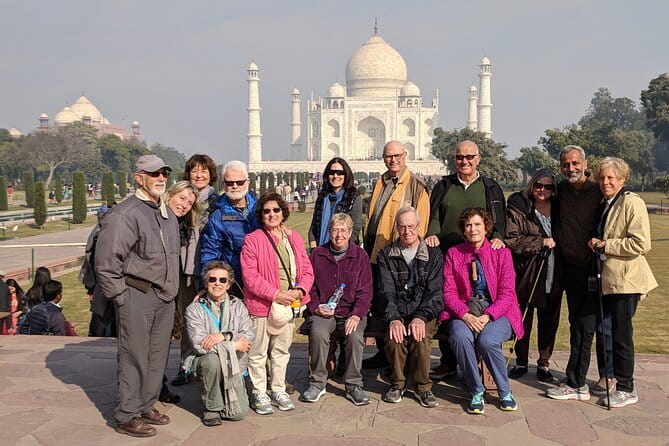
After the Taj Mahal, the tour stays in Agra long enough to go beyond the headline sight.
Agra Fort: Mughal power in fortress form
You’ll visit Agra Fort, also a UNESCO World Heritage site, for about two hours. It’s described as a historical fort known as Agra’s Red Fort, tied to Mughal history—Humayun was crowned at this fort, and it was later renovated by Mughal emperors.
The fort setting helps you understand scale. The Taj tells you about memorial design. Agra Fort helps you understand how rulers thought about control, defense, and presence.
Itmad-ud-Daula (Baby Taj): when you slow down
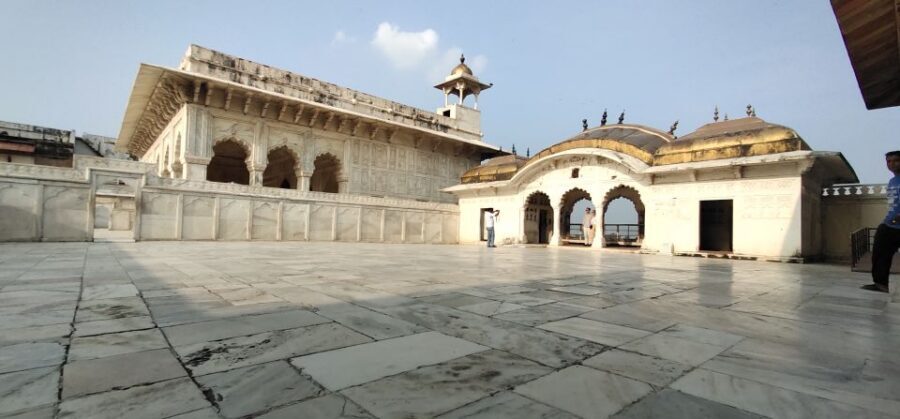
Next is Itmad-ud-Daula, a Mughal mausoleum often called the Baby Taj. The tour calls it a “jewel box” style tomb and notes it’s sometimes regarded as a draft of the Taj Mahal. You’ll have about an hour.
If you’re the kind of person who likes to compare details, this is a smart pairing with the Taj. The experience becomes more analytical: you can look for the design echoes without feeling like you’re repeating yourself.
Fatehpur Sikri: an abandoned Mughal capital feeling alive
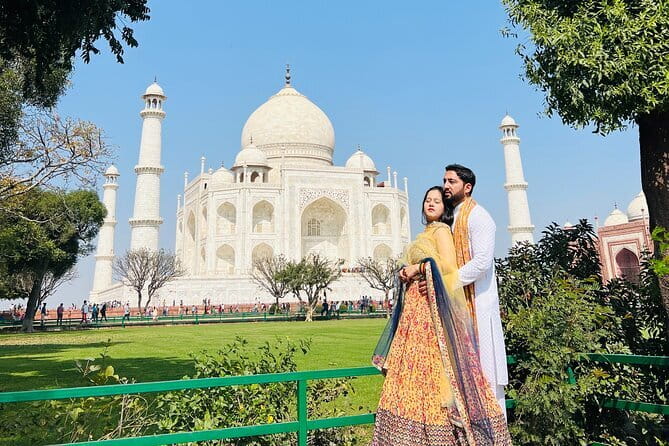
Fatehpur Sikri is your next big Mughal stop, scheduled for about 1.5 hours. The tour explains that it was founded as the capital of the Mughal Empire in 1571 by Emperor Akbar, serving as capital from 1571 to 1585, and then was abandoned after Akbar’s campaign in Punjab. Later, it was completely abandoned in 1610.
That timeline matters because Fatehpur Sikri isn’t just “a place you visit.” It’s a city built for power, then left behind. In a short visit, you’ll still feel the shift between intention and emptiness—and that makes it more than just another UNESCO tick box.
Jaipur Day 3: royal architecture, angles, and an observatory
Day 3 shifts from Agra’s Mughal mood to Jaipur’s Rajput identity, with palaces, towers, and science instruments. The tour keeps the moves efficient while giving each stop a realistic time window.
City Palace: Mughal and Rajput blend inside a living complex
You’ll spend about two hours at City Palace, located within Jaipur’s walled city. The tour describes it as conceived and built by Maharaja Sawai Jai Singh II and notes a fusion of Mughal and Rajput architecture. It’s also still home to the royal family, based on the tour description.
This is one of those stops where you might want your guide to keep the explanations rolling. When a place is layered like this, a guided stop helps you keep track of what’s decorative, what’s symbolic, and what’s functional.
Hawa Mahal: the Palace of Breeze, built to look dramatic
Next is Hawa Mahal, the Palace of Breeze. The tour notes it’s a five-storey building, described as the tallest building built without a foundation, and it has an unusual curved architecture that leans at an 87 degree angle with a pyramidal shape. You’ll have about 30 minutes.
This is a stop that’s about visual impact. Don’t expect it to function like a full museum. Instead, use the time to understand why the design is so specific—this is architecture made to be seen.
Jantar Mantar: 13 instruments measuring the heavens
Then comes Jantar Mantar, an observatory. The tour explains that its name means instruments for measuring the harmony of the heavens and that it consists of 13 architectural astronomy instruments. It also notes that it was one of five built by Maharaja Jai Singh II.
This is where you’ll either love the logic or need a guide to make it click. Since the tour includes a licensed guide for insights, you’re less likely to feel like you’re standing in front of random stone shapes.
Jal Mahal: water palace for photos and a quick reset
For a lighter moment, the tour includes Jal Mahal, described as the water palace and one of Jaipur’s most visited monuments. Admission is listed as free, and you’ll have about 30 minutes.
The tour frames this stop as especially good for photography. If you’re tired from palace-and-fort intensity, this is also a good mental reset.
Albert Hall Museum: an indoor break with a wide artifact mix
Finally, you’ll visit Albert Hall Museum for about an hour. The tour describes a collection including paintings, jewelry, carpets, ivory, stone, metal sculptures, and works in crystal. It also specifically lists coins from the Gupta, Kushan, Delhi Sultanate, and Mughal periods.
This museum stop adds balance. After hours of outdoor architecture, you get a place where you can cool down and still learn.
Day 4: the quiet ending and leaving Delhi
Day 4 is straightforward: after breakfast, you depart for Delhi International Airport. The driver drop-off is part of the plan, and the total time listed is about five hours.
This is a good structure if you want to end without a stressful scramble. It also gives you a clean break between “last sight in India” and “onward journey.”
Price and value: what $226.66 per person really buys
The listed price is $226.66 per person for about four days, with a private car, professional driver, GST, fuel surcharge, parking fees, and airport/hotel pick-up and drop-off. You also get three breakfasts and small in-car comforts like mineral water and snacks during intercity travel.
One big value lever is that the tour includes personal care and attention from the office representative in Delhi, Agra, and Jaipur. In the feedback shared with the operator, the coordination is described as fast and friendly, and that kind of support can be the difference between a smooth day and a day where you’re chasing details.
You do need to budget for entrance fees, which the tour lists as approximately USD 45 per person for all monuments. Since several stops are free (like India Gate, Swaminarayan Akshardham, Raj Ghat, Fatehpur Sikri, and Jal Mahal), that ticket total suggests you’re mostly paying for the big paid sites like Qutub Minar, Taj Mahal, and others that require entry.
Also, note the accommodation clause: three nights of accommodation are included only if you book the option that includes hotels. If you’re pairing this with your own hotel plans, you’ll want to confirm which option you’re buying so the cost match stays honest.
Who this tour suits best
This private tour fits best if you want:
- A first-timer-friendly Golden Triangle with clear timing and a guide
- A trip where you can enjoy monuments without negotiating logistics
- A comfortable ride plan with car type matched to your group size
- Sunrise Taj Mahal as a priority rather than an optional add-on
It might not fit as well if you hate early mornings. The Taj Mahal portion is scheduled for 05:00 am, and that drives the day’s energy level.
Should you book this private Golden Triangle tour to Agra and Jaipur?
If you want the classic route but with fewer headaches, this is an easy yes. The big reason: you get a private car, a licensed guide, and a schedule that hits the most important architecture in each city without making you do all the homework. The comfort details (sanitized car, water, snacks) also help the drive days feel manageable.
The only real “wait” item is the cost of entrance tickets and the early Taj start. If you can budget roughly USD 45 extra for monuments and you’re okay being up early, you’ll likely find this tour format delivers strong value for a short window.
FAQ
Is Taj Mahal sunrise included in the tour?
Yes. The tour describes a pickup to Taj Mahal at around 05:00 am, with your guide meeting you for a guided visit. Entrance fees for Taj Mahal are not included.
What’s included in the tour price?
The tour includes private air-conditioned car, professional driver, GST, fuel surcharge, parking fees, hotel or airport pick-up and drop-off, mineral water in the car, seasonal fruits/biscuits/cookies during intercity travel, and three breakfasts. Accommodation is included only if you book the hotel option.
Are entrance fees included?
No. Entrance fees are listed as approximately USD 45 per person for all monuments.
What vehicle will I ride in?
Car type depends on your group size: a four-seater sedan for 1–2 people, a six-seater Innova for 3–4 people, and an 11-seater Tempo Traveller/van for 5–10 people.
Is this a private tour?
Yes. The tour is private, meaning only your group participates.
What is the cancellation window for a full refund?
You can cancel up to 6 days in advance for a full refund. If you cancel 2–6 days before, you receive a 50% refund, and if you cancel within 2 days, there is no refund.